Disclosure: This article may contain affiliate links. If you buy through these links, we may earn a commission at no extra cost to you. Our recommendations are based on editorial criteria, not commission rates.
“Best probiotic for bloating” sounds like a simple shopping question. In practice, bloating has many causes — gas from fermentation, slowed gut motility, visceral hypersensitivity in IBS, small intestinal bacterial overgrowth (SIBO), constipation, lactose intolerance, and reactions to FODMAP foods. A probiotic that helps one mechanism may worsen another.
Evidence-backed probiotics do exist for some bloating-related conditions, especially certain IBS subtypes, but strain names matter more than CFU marketing. This guide explains what to try first without food, which strain families have trial support, and who should not self-treat with probiotics.
If bloating is new, severe, accompanied by weight loss, blood in stool, fever, or persistent pain, seek medical evaluation — do not supplement first.
Quick answer
Start with food and fiber fundamentals (probiotics vs prebiotics, gut health naturally). If you still bloat — especially with IBS — probiotics with trial evidence for gas/bloating include specific Bifidobacterium and Lactobacillus strains (e.g., *B. animalis* DN-173 010, *B. infantis* 35624, *L. plantarum* 299v in some IBS studies). Use one product for 4–8 weeks, track symptoms, and stop if bloating worsens. People with suspected SIBO or immunocompromise need clinician guidance.
Who this is for
Adults with recurrent gas and bloating who are considering a probiotic after basic diet changes — especially those with:
- IBS diagnosed or suspected by a clinician
- Bloating after antibiotics
- Irregular bowel habits with distension
- Lactose or FODMAP sensitivity already partially managed
Who should be careful
Talk to a clinician before probiotics if you:
- Are immunocompromised (transplant, chemotherapy, advanced HIV, critical illness)
- Have short bowel syndrome, central lines, or structural heart disease (endocarditis risk — rare but serious)
- Suspect SIBO (probiotics can temporarily worsen bloating)
- Have pancreatic insufficiency or unexplained weight loss
- Are critically ill in hospital (probiotic risks documented in fragile ICU populations)
- Are treating infants — pediatric dosing and strains differ
Pregnancy: some strains have safety data, but product choice should be clinician-guided.
Why bloating happens (short overview)
Bloating is the sensation of abdominal pressure or visible distension. Common contributors:
| Mechanism | Examples |
|---|---|
| Gas production | Fermentation of FODMAPs, lactose, or rapid fiber increase |
| Slow transit | Constipation trapping gas |
| Visceral hypersensitivity | IBS — normal gas feels excessive |
| Dysbiosis | After antibiotics or illness |
| Swallowed air | Carbonated drinks, fast eating, gum |
| Motility disorders | Gastroparesis, pelvic floor dysfunction |
Probiotics mainly help when microbial balance or IBS symptom pathways are part of the picture — not when bloating is a red-flag symptom of structural disease.
Food first: the step most people skip
Before buying capsules:
- Slow fiber increases — jump-starting psyllium or inulin can bloat temporarily (fiber guide).
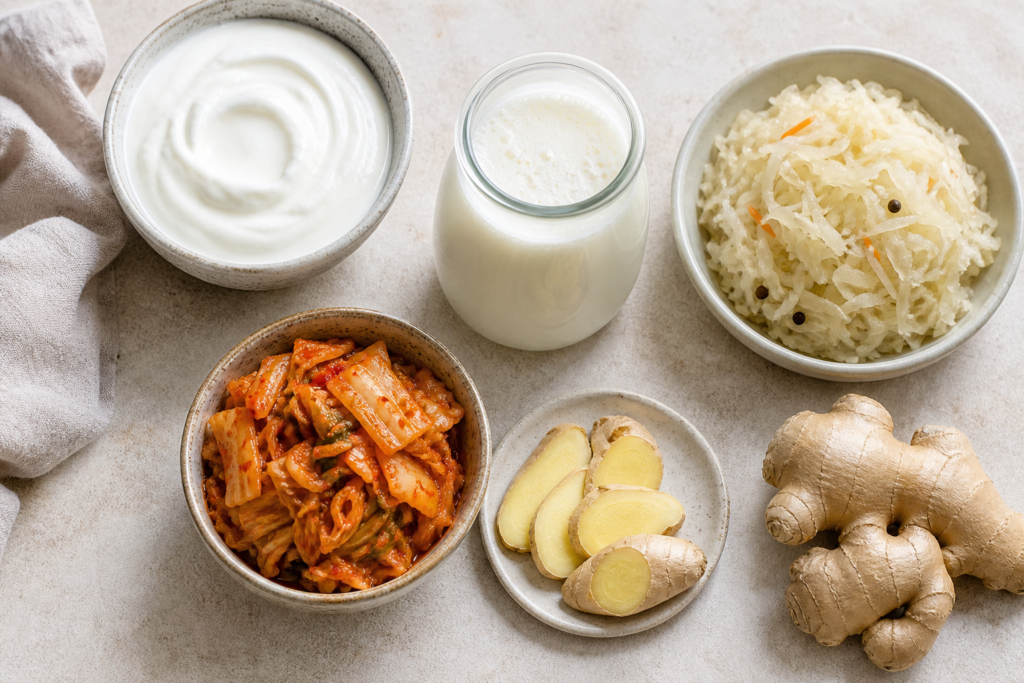
- Fermented foods — yogurt, kefir, sauerkraut (if tolerated) provide live cultures plus food matrix benefits.
- FODMAP awareness — onions, garlic, beans, wheat, and some sweeteners bloat sensitive people.
- Meal pacing — eating quickly increases swallowed air.
- Lactose test — trial lactose-free dairy if cheese or milk correlates with symptoms.
Our how to improve gut health naturally guide covers the wider foundation.
Strain-specific evidence (what research actually studied)
Probiotic research is strain-specific. These examples have IBS or bloating-related trial data in peer-reviewed literature — not guaranteed results for every person:
| Strain (examples) | Context studied | Bloating/gas findings (summary) |
|---|---|---|
| *Bifidobacterium infantis* 35624 | IBS | Reduced bloating, pain, and bowel symptom scores in some trials |
| *Bifidobacterium animalis* DN-173 010 | Transit/time | Improved transit; gas/bloating secondary endpoints in some studies |
| *Lactobacillus plantarum* 299v | IBS | Reduced abdominal pain and bloating in several IBS trials |
| *Lactobacillus acidophilus* NCFM + *B. lactis* Bi-07 | Gut comfort | Mixed IBS symptom improvements in combination products |
| Multi-strain IBS formulas | IBS | Some meta-analyses show modest symptom reduction vs placebo |
Important: Commercial products rename strains constantly. Match the genus, species, and strain code on the label to studied strains — not just “Lactobacillus blend.”
The NIH Office of Dietary Supplements notes that probiotic benefits are organism-specific and not all products labeled probiotic have proven health effects.
How to read a probiotic label
Look for:
- Genus, species, strain (three-part name + letter/number code)
- CFU count at expiration, not only at manufacture
- Storage requirements (some need refrigeration)
- Allergens (dairy, soy) if you react to fermented bases
- Prebiotic fibers in the capsule (FOS/inulin) — can bloat FODMAP-sensitive people
Avoid choosing solely by “highest CFU” — strain evidence matters more.
Probiotics vs prebiotics vs postbiotics for bloating
| Approach | What it is | Bloating note |
|---|---|---|
| Probiotic | Live beneficial microbes | Strain-specific help or harm |
| Prebiotic | Fibers that feed microbes | Can increase gas temporarily |
| Postbiotic | Metabolites from fermentation | Emerging; not first-line for bloating |
See probiotics vs prebiotics and postbiotics explainer. Spore probiotics are a separate category with different evidence and tolerance profiles.
Practical trial protocol
- Baseline 1–2 weeks — symptom diary (bloating 0–10, stool form, diet notes).
- Pick one product with a studied strain matching your pattern (IBS vs post-antibiotic).
- Take as labeled — usually with food unless directed otherwise.
- Reassess at 4 weeks — continue only if clear benefit.
- Stop if worse — especially increased distension or pain (consider SIBO evaluation).
Do not rotate five products in two weeks — you will not learn what works.
When probiotics may worsen bloating
- Rapid dose escalation of combined prebiotic + probiotic
- SIBO — fermenting bacteria in the small intestine may increase gas initially
- Histamine-sensitive individuals — some strains differ in histamine production (emerging area; evidence evolving)
- Wrong strain for your IBS subtype — IBS-D vs IBS-C patterns differ
If bloating escalates after starting, stop and consult a clinician rather than “pushing through.”
Safety and interactions
Probiotics are generally safe in healthy adults, but report them like medications if you:
- Take immunosuppressants
- Use antifungals or antibiotics (timing matters — often separate by a few hours)
- Have central venous catheters
Serious infections in vulnerable hosts are rare but documented. Use our supplement safety checklist.
Frequently Asked Questions
What is the best probiotic for bloating?
How long do probiotics take to work for bloating?
Can probiotics cause more bloating at first?
Are refrigerated probiotics better?
Should I take probiotics with antibiotics?
Do I need 50 billion CFU?
Can probiotics help lactose intolerance bloating?
When should I see a doctor for bloating?
Bottom line
The “best” probiotic for bloating is the one with strain-level evidence that matches your symptom pattern — used after food, fiber, and lifestyle basics are addressed. Start one evidence-backed strain, track symptoms for a month, and stop if you feel worse. Bloating that persists or escalates deserves medical evaluation, not endless product switching.
Related Articles
- Probiotics vs Prebiotics: Which Should You Try First?
- How to Improve Gut Health Naturally
- Spore Probiotics vs Traditional Probiotics
- Postbiotics: What They Are, Benefits, and Safety
- Fiber Supplements for Appetite: Psyllium vs Inulin
- Supplement Side Effects: A Simple Safety Checklist
Sources
- NIH Office of Dietary Supplements: Probiotics Fact Sheet — https://ods.od.nih.gov/factsheets/Probiotics-HealthProfessional/
- NCCIH: Probiotics — https://www.nccih.nih.gov/health/probiotics-what-you-need-to-know
- American College of Gastroenterology: IBS clinical guidance — https://gi.org/guideline/irritable-bowel-syndrome/
- World Gastroenterology Organisation: Probiotics and prebiotics guideline — https://www.worldgastroenterology.org/guidelines
- PubMed: *Lactobacillus plantarum* 299v IBS trials — https://pubmed.ncbi.nlm.nih.gov/
- PubMed: *Bifidobacterium infantis* 35624 IBS research — https://pubmed.ncbi.nlm.nih.gov/