
Disclosure: This article may contain affiliate links. If you buy through these links, we may earn a commission at no extra cost to you. Our recommendations are based on editorial criteria, not commission rates.
If you are in your 40s or early 50s and your digestion feels different despite eating the same foods, you are not imagining it. Gut health in perimenopause is a real clinical pattern — not a niche wellness trend. The good news: dietary fiber, movement, stress modulation, and targeted supplements can help many people without replacing necessary gynecologic or gastroenterology care.
Red-flag symptoms — blood in stool, unexplained weight loss, persistent vomiting, severe abdominal pain, or anemia — need prompt medical evaluation regardless of life stage.
Quick answer
Start with foundation habits from our natural gut health guide: adequate fiber (25–30+ g daily gradually), hydration, regular movement, and consistent meal timing. For constipation-dominant symptoms, psyllium or food-first fiber often helps transit; for fermentable fiber tolerance, compare psyllium vs inulin options carefully if bloating is prominent. Probiotics may ease specific symptoms but are not hormone replacements. Persistent or worsening GI changes warrant colon cancer screening per guidelines and discussion of HRT, thyroid, and pelvic health with your clinician.
Who this is for
People in perimenopause (typically mid-40s to early 50s, though timing varies) experiencing:
- New or worsening bloating and gas
- Constipation, loose stools, or alternating patterns
- Reflux or early fullness
- Feeling that "everything bothers my stomach" after years of stable digestion
Who should be careful
Seek individualized medical advice before self-treating if you:
- Have a history of eating disorders — restrictive fiber experiments can trigger relapse
- Carry IBD, celiac disease, or prior GI surgery
- Take hormone therapy, thyroid medication, SSRIs, or GLP-1 drugs — all affect gut function
- Have red-flag symptoms listed above
- Are overdue for colonoscopy or FIT screening based on age and family history
Why perimenopause affects the gut
Several mechanisms overlap during the menopause transition:
Hormone fluctuations. Estrogen influences nitric oxide-mediated smooth muscle relaxation in the GI tract. Declining and erratic levels may contribute to slower transit and constipation in some women, while others experience loose stools during progesterone shifts.
Microbiome changes. Observational studies show microbiome diversity and composition shift across the menopause transition, sometimes paralleling metabolic changes. Diet and medication use strongly confound these associations — hormones are one variable among many.
Pelvic floor and rectal sensitivity. Childbirth history, chronic straining, and age-related pelvic floor changes affect constipation and incontinence symptoms that peak when reported alongside perimenopause in clinical surveys.
Stress and sleep disruption. Cortisol rhythm changes and fragmented sleep alter gut motility and visceral pain perception independently of ovarian hormones.
Medication and supplement load. Iron for heavy periods, magnesium for sleep, NSAIDs for joint pain, and new probiotics stacked together can explain symptom flares without invoking "hormone detox" narratives.
Understanding these layers keeps expectations realistic: fixing gut comfort supports quality of life during perimenopause; it does not replace evaluation of endometriosis, SIBO, celiac, or thyroid disease when symptoms fit those patterns.
Common GI symptoms during perimenopause
| Symptom pattern | Possible contributors | First-line approaches |
|---|---|---|
| Bloating after meals | Fermentable carbs, slower transit, stress | Food diary; gradual fiber; meal pacing |
| Constipation | Low fiber, dehydration, pelvic floor, iron supplements | Psyllium, fluids, walking; pelvic PT if chronic |
| Loose stools / urgency | IBS-type sensitivity, magnesium, infection | Stool testing if acute; low-FODMAP trial with dietitian |
| Reflux | Weight change, late eating, alcohol | Smaller evening meals; head-of-bed elevation |
| Gas with fiber increase | Normal adaptation vs FODMAP intolerance | Increase fiber slowly over 2–3 weeks |
Symptom overlap with irritable bowel syndrome (IBS) is common. A structured trial of dietary modification beats random supplement stacking.
Diet strategies that hold up in evidence
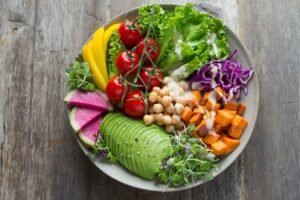
Fiber first, speed second. Most perimenopausal women fall short of fiber targets. Increase soluble and insoluble sources together — oats, beans, lentils, berries, cruciferous vegetables, and whole grains — over several weeks to limit gas.
Protein at each meal. Preserving lean mass during the menopause transition supports metabolic health and satiety. Protein also pairs well with fiber for blood sugar stability.
Limit ultra-processed load. High emulsifier and additive intake correlates with microbiome shifts in research; practical benefit comes from replacing packaged snacks with whole foods, not perfectionism.
Alcohol and spicy triggers. Both worsen reflux and sleep — sleep loss then worsens gut symptoms in a feedback loop.
Calcium and vitamin D through food support bone health during estrogen decline; separate calcium from high-dose iron if both are prescribed.
For a full habit checklist, see how to improve gut health naturally.
Fiber supplements when food is not enough
Whole food fiber remains the anchor, but supplements help when constipation dominates or dietary change is slow.
| Fiber type | Best for | Watch-outs in perimenopause |
|---|---|---|
| Psyllium husk | Constipation, cholesterol support | Take with ample water; can help if iron causes constipation |
| Methylcellulose | Gentle bulk without fermentation | Slower effect; good if gas-sensitive |
| Inulin / FOS | Feeding bifidobacteria | Can worsen bloating if FODMAP-sensitive |
| Partially hydrolyzed guar gum | IBS-mixed patterns | Often better tolerated than inulin |
Our detailed psyllium vs inulin comparison explains fermentability and appetite effects — relevant when perimenopausal metabolic changes coincide with gut symptoms.
Introduce one fiber source at a time over two weeks. Combining inulin, a high-dose probiotic, and a greens powder simultaneously makes troubleshooting impossible.
Probiotics, prebiotics, and postbiotics — realistic roles
Probiotics are not estrogen substitutes. They may reduce bloating or antibiotic-associated disruption in specific scenarios, but strain selection matters more than "women's formula" branding.
Reasonable use cases during perimenopause:
- Bloating-predominant IBS after dietary foundation — consider evidence-backed strains under clinician or dietitian guidance
- Antibiotic course recovery — short-term targeted products
- Antibiotic-associated diarrhea prevention per prescribing guidance
- Constipation-predominant IBS — some *Bifidobacterium* trials show modest benefit
Skip products promising "hormone balance" via undisclosed herbal blends without discussing interactions with hormone therapy or anticoagulants.
Prebiotics (inulin, GOS, FOS) feed beneficial bacteria but aggravate gas in FODMAP-sensitive individuals — common in midlife IBS overlap.
Movement, stress, and sleep — the underrated gut trio
Walking after meals stimulates motility. Resistance training preserves muscle that supports core stability and metabolic health as visceral fat redistribution occurs during menopause transition. Breathwork and yoga lower visceral hypersensitivity in IBS trials — relevant when stress and sleep loss amplify bloating.
Sleep hygiene directly affects next-day gut comfort. Fragmented sleep from night sweats warrants gynecologic discussion about HRT candidacy — treating only the gut misses the upstream trigger.
Hormone therapy and gut symptoms — what to discuss with your clinician
Menopausal hormone therapy (MHT) is not primarily a GI treatment, but some women report improved sleep, mood, and indirectly better digestion when vasomotor symptoms disrupted eating patterns. Others notice reflux or bloating with certain formulations — formulation and route matter.
Separate gut evaluation should continue: HRT does not replace colon screening, celiac testing when indicated, or treatment of IBS.
Supplements beyond fiber and probiotics
| Supplement | Evidence in GI context | Notes |
|---|---|---|
| Magnesium (citrate) | Osmotic laxative effect at moderate doses | Helpful for constipation; can loosen stools if dose high |
| Peppermint oil (enteric-coated) | IBS pain and bloating trials | Short-term use; reflux caution |
| Ginger | Nausea and motility support | Food or capsule; anticoagulant caution at high doses |
| Digestive enzymes | Only if documented insufficiency (e.g., pancreatic) | Not for undifferentiated bloating |
| Collagen / glutamine | Weak for generic bloating | Skip unless specific indication |
Avoid detox teas and laxative herbs for daily constipation — habituation and electrolyte loss risk rise with chronic senna or cascara sagrada use.
Building a 4-week perimenopause gut trial
Week 1: Baseline symptom log; increase water; fix meal timing (finish dinner 3 hours before bed if reflux).
Week 2: Add fiber to 25 g daily from food first; walk 10 minutes post-lunch.
Week 3: If constipation persists, add psyllium trial; if bloating worsens, pause and review FODMAP triggers with professional support.
Week 4: Evaluate — continue, adjust, or escalate to GI referral if red flags or no improvement.
One change at a time beats a six-product "menopause gut stack" from social media.
Frequently Asked Questions
Does menopause cause gut health problems?
Can probiotics balance hormones in perimenopause?
Why is bloating worse during perimenopause?
Is psyllium safe during perimenopause?
Can HRT improve digestion?
Should I take calcium with fiber supplements?
When should I see a gastroenterologist?
Bottom line
Gut health in perimenopause responds best to the same fundamentals that work at any age — fiber, fluids, movement, sleep, and stress care — with patience for hormone-driven fluctuation. Supplements fill gaps: psyllium for constipation, targeted probiotics for defined symptoms, magnesium when appropriate. Layered "hormone detox" kits rarely outperform habit change. Use our natural gut health roadmap and fiber comparison guide as anchors, and partner with clinicians on hormone therapy and screening when symptoms persist or red flags appear.
Related Articles
- How to Improve Gut Health Naturally
- Fiber Supplements for Appetite: Psyllium vs Inulin
- Best Probiotics for Bloating: Strains That Actually Help
- Low FODMAP vs Probiotics for IBS
- Supplement Side Effects: A Simple Safety Checklist
Sources
- NCCIH: Menopausal Symptoms — https://www.nccih.nih.gov/health/menopausal-symptoms
- NIH Office of Dietary Supplements: Fiber Fact Sheet — https://ods.od.nih.gov/factsheets/Fiber-HealthProfessional/
- The North American Menopause Society — https://www.menopause.org
- Kroenke CH, et al. GI symptoms across menopause transition. *Menopause* — https://pubmed.ncbi.nlm.nih.gov/23880755/
- Heiman ML, Greenway FL. Gut microbiome and metabolic changes. *Endocrinology* — https://pubmed.ncbi.nlm.nih.gov/28535859/
- World Gastroenterology Organisation: IBS Guidelines — https://www.worldgastroenterology.org/guidelines