
Disclosure: This article may contain affiliate links. If you buy through these links, we may earn a commission at no extra cost to you. Our recommendations are based on editorial criteria, not commission rates.
Zinc is a trace mineral involved in hundreds of enzymes, including those that support immune cell development, wound repair, and antioxidant defenses. Deficiency impairs immunity and slows healing. That biological fact drives heavy marketing of zinc for “immune support” — especially during cold season.
The nuanced truth: correcting deficiency matters; mega-dosing in already replete adults has diminishing returns and real risks. Zinc lozenges may modestly shorten colds when started very early, but they do not prevent all infections and can cause nausea and metallic taste.
Quick answer
Most adults need 8–11 mg/day from food (men higher than women). Supplement only if diet is low or a clinician confirms deficiency. For colds, some studies use zinc acetate/gluconate lozenges (~75 mg elemental zinc daily, divided) started within 24 hours of symptoms for short duration — not year-round. Do not exceed 40 mg/day chronic supplemental zinc without medical supervision (NIH upper limit).
Who this is for
Adults wondering whether zinc pills help colds, immunity, or frequent illness — especially vegetarians, older adults, or people with poor appetite who may run low.
Who should be careful
Avoid unsupervised high-dose zinc if you:
- Take copper or iron supplements (competitive absorption)
- Have kidney disease
- Use zinc nasal sprays (anosmia risk — avoid)
- Are on antibiotics (quinolones, tetracyclines — separate dosing)
- Have HIV or immunocompromise (specialist protocols only)
Food sources first
| Food | Approx. zinc per serving |
|---|---|
| Oysters | Very high |
| Beef, crab | High |
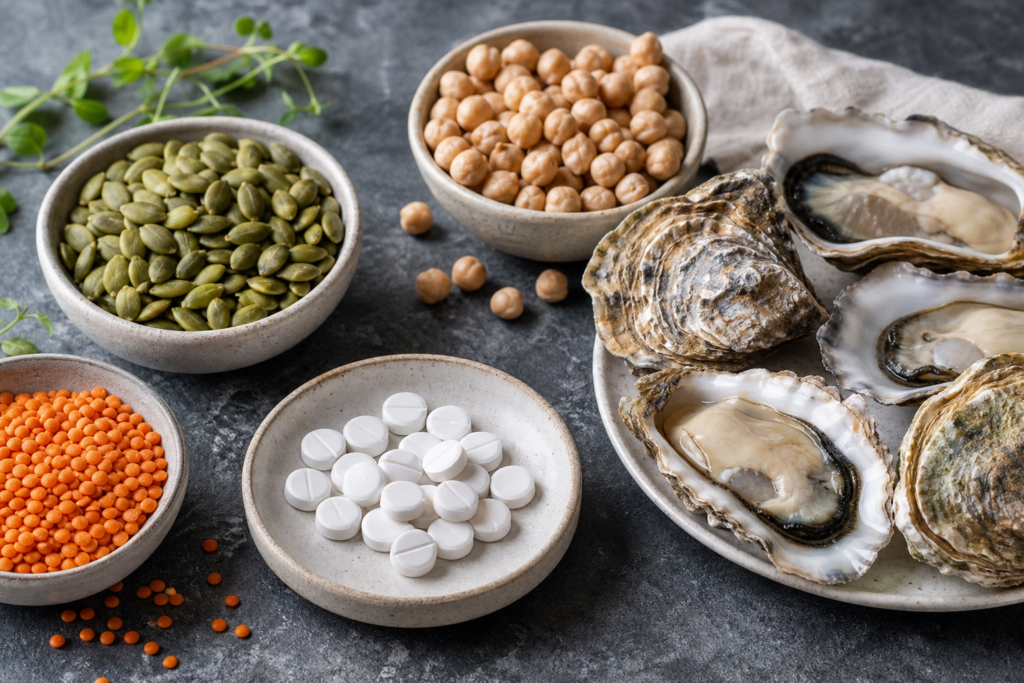
| Pumpkin seeds, chickpeas | Moderate |
| Yogurt, cashews | Moderate |
| Whole grains (with phytates) | Lower bioavailability |
Vegetarians and vegans may need 50% more dietary zinc due to phytates binding zinc — soaking, fermenting, and leavening improve absorption.
Zinc and colds: what trials show
Meta-analyses of zinc lozenges suggest shorter cold duration by roughly 1–3 days when:
- Started within 24 hours of first symptoms
- Used as lozenges (not solely pills swallowed) for dissolution in mouth/throat
- Provide adequate ionic zinc (acetate/gluconate often studied)
Prevention trials are mixed — daily zinc does not clearly stop all colds in replete adults.
Forms and absorption
| Form | Notes |
|---|---|
| Zinc gluconate / acetate lozenges | Common in cold studies |
| Zinc picolinate / citrate | Capsule forms; GI tolerance varies |
| Zinc oxide | Poor absorption; cheap multis |
| Nasal zinc | Avoid — permanent smell loss reported |
Take zinc supplements away from fiber, calcium, and iron by 2+ hours if possible.
Dosage reference
| Use | Guidance |
|---|---|
| Daily maintenance (supplement) | 8–15 mg elemental if diet low |
| Upper tolerable supplemental intake | 40 mg/day long term (adults) |
| Acute cold protocols (short term) | Higher divided lozenge doses in trials — follow label; limit duration |
| Deficiency repletion | Prescriber-guided; may need copper monitoring |
Chronic zinc above 40 mg/day can cause copper deficiency, anemia, and immune dysfunction — ironic for an “immune” supplement.
Side effects
- Nausea (especially empty stomach)
- Metallic taste, mouth irritation (lozenges)
- Copper deficiency with long-term high dose
- Reduced HDL at very high doses in some studies
Use supplement side effects checklist.
Frequently Asked Questions
Is zinc good for your immune system?
Can I take zinc daily?
Zinc with vitamin C?
Does zinc prevent COVID or flu?
Who is at risk of deficiency?
Can zinc help wound healing?
Should children take zinc lozenges?
Zinc before surgery?
Bottom line
Zinc is essential for immune function, but more is not always better. Eat zinc-rich foods, supplement modestly if intake is low, and use short-term lozenge protocols for colds only early in illness — not as a year-round megadose. Stay under chronic upper limits and monitor copper if dosing high.
Related Articles
- Supplement Side Effects: A Simple Safety Checklist
- How to Improve Gut Health Naturally
- Vitamin D and Blood Sugar
- Turmeric and Curcumin for Inflammation
Sources
- NIH ODS: Zinc Fact Sheet — https://ods.od.nih.gov/factsheets/Zinc-HealthProfessional/
- Cochrane: Zinc for the common cold — https://pubmed.ncbi.nlm.nih.gov/
- PMC: Zinc and immune function review — https://pubmed.ncbi.nlm.nih.gov/
- MedlinePlus: Zinc in diet — https://medlineplus.gov/ency/article/002416.htm
- FDA: Zinc nasal spray warnings (historical) — https://www.fda.gov/