Disclosure: This article may contain affiliate links. If you buy through these links, we may earn a commission at no extra cost to you. Our recommendations are based on editorial criteria, not commission rates.
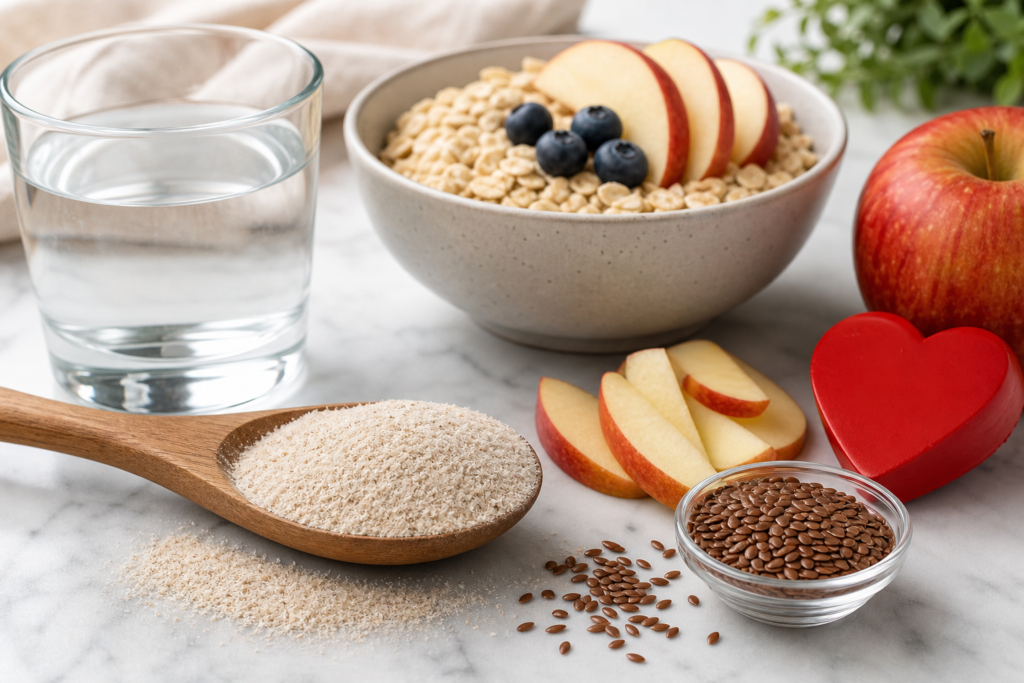
Psyllium husk is one of the few dietary supplement ingredients with recognized cholesterol-related labeling in the United States when used at specific doses as part of a low saturated fat, low cholesterol diet. That regulatory context matters because most supplement claims are vague — psyllium’s LDL-lowering story is backed by soluble-fiber physiology and multiple clinical trials.
Still, psyllium is not a statin substitute. It produces modest LDL improvements for many people, works gradually, requires consistent daily use with adequate water, and fits best as part of a broader heart-health pattern that includes food quality, movement, and medical care when indicated.
If you have high cholesterol, heart disease, or take cholesterol-lowering medication, coordinate psyllium use with your clinician — fiber can affect medication absorption timing and may allow dose adjustments only under supervision.
Quick answer
Psyllium husk (soluble fiber from *Plantago ovata* seeds) can lower LDL cholesterol modestly — often on the order of 5–10% in trials when taken daily at ~10 g soluble fiber (roughly 1–2 tablespoons of psyllium husk, product-dependent) with plenty of water, alongside dietary changes. Benefits build over weeks. Choking and bowel obstruction are rare but serious risks if taken dry or without fluid.
Who this is for
Adults exploring non-pharmaceutical LDL support who already eat reasonably well but want an evidence-backed fiber tool — especially people who:
- Have mildly elevated LDL or borderline lipids
- Struggle to get enough soluble fiber from food
- Tolerate psyllium in other contexts (psyllium vs inulin for appetite)
- Want a heart-hub supplement with clearer evidence than most categories
Who should be careful
Discuss psyllium with a clinician before use if you:
- Have difficulty swallowing, esophageal narrowing, or prior bowel obstruction
- Take metformin, lithium, carbamazepine, or thyroid hormone — separate dosing by several hours
- Have constipation severe enough to cause pain or vomiting
- Are on multiple lipid-lowering drugs — LDL may drop more than expected when combined
- Have IBS that worsens with fiber — start very low
Never take dry psyllium powder without immediate large-volume water.
How psyllium affects cholesterol
Soluble fiber interferes with cholesterol metabolism in the gut through several mechanisms:
Bile acid binding: The liver uses cholesterol to make bile acids for fat digestion. Psyllium traps bile acids in the intestine; they are excreted rather than reabsorbed. The liver pulls more cholesterol from the blood to replace bile acids — lowering LDL.
Reduced dietary cholesterol absorption: Gel formation slows intestinal processing of fats and sterols.
Fermentation products: Gut bacteria ferment some fiber to short-chain fatty acids that may influence liver lipid metabolism — a secondary pathway.
These effects are real but incremental. They complement — not replace — reducing saturated fat, increasing viscous fiber from food, and using prescribed therapy when LDL remains high.
What clinical research shows
Meta-analyses of psyllium trials report average LDL reductions of roughly 5–10% with daily soluble fiber doses around 10 g, often studied over 8+ weeks. Individual response varies with baseline diet, LDL level, adherence, and whether statins are also used.
Some trials show additional improvements in non-HDL cholesterol and apolipoprotein B — markers relevant to cardiovascular risk beyond LDL alone.
Context: Trials typically enroll adults already advised to improve diet. Psyllium adds to that foundation. People eating very low fiber at baseline often notice the largest relative change.
Psyllium vs other soluble fibers
| Fiber source | LDL evidence | Notes |
|---|---|---|
| Psyllium husk | Strong supplement evidence | FDA-qualified fiber claim at defined doses |
| Oat beta-glucan (food) | Strong food evidence | 3 g beta-glucan/day from oats |
| Barley beta-glucan | Moderate | Less common in supplements |
| Inulin | Weaker for LDL | More prebiotic; more gas (fiber comparison) |
| Wheat dextrin | Limited LDL data | Often marketed for regularity |
Food-first sources — oats, barley, beans, lentils, apples, citrus — remain the baseline recommendation from heart-health dietary patterns (DASH, Mediterranean).
Dosage and how to take it
Product labels vary. Focus on grams of soluble fiber per serving:
- Many cholesterol studies use ~10 g/day soluble fiber from psyllium
- Typical psyllium husk is ~70–80% soluble fiber — so ~1–2 level tablespoons daily (split doses) is a common research range
- Always follow your product label and clinician advice
Protocol for tolerance:
- Start half the target dose for one week with 8–16 oz water per teaspoon
- Increase to full dose if bowels tolerate
- Take before or with meals — some take a portion before the largest meal
- Separate from critical medications by 2–4 hours if advised
Powder, capsules, and sugar-free drink mixes differ in soluble fiber per serving — read Supplement Facts.
Expected timeline
- Bowel effects: Days (regularity)
- LDL lab changes: Often 4–8 weeks of daily use
- Maximum effect: May require 8–12 weeks before repeat lipid panel
Recheck lipids with your clinician rather than assuming benefit.
Side effects and safety
| Effect | Frequency / note |
|---|---|
| Gas, bloating | Common when starting — taper up slowly |
| Constipation | If under-hydrated |
| Loose stools | If dose too high |
| Choking / esophageal blockage | Rare; risk if taken without enough fluid |
| Allergic reaction | Uncommon |
Use the supplement safety checklist when combining psyllium with other products.
Lifestyle stack for cholesterol (beyond psyllium)
Psyllium works best inside a heart-health routine:
- Reduce saturated fat from fatty meats, butter, and full-fat dairy shifts
- Increase viscous fiber from oats, beans, and vegetables
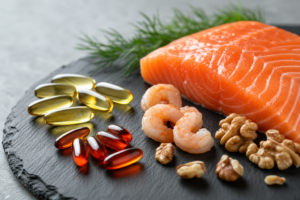
- Include omega-3-rich seafood (omega-3 guide)
- Move regularly — exercise raises HDL and supports weight management
- Manage weight if elevated — see whey vs plant protein for satiety support
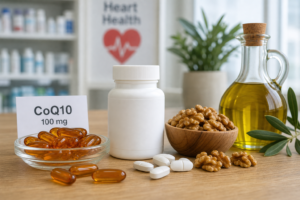
- Consider CoQ10 context if on statins — separate topic (CoQ10 guide)
For blood pressure alongside lipids, see supporting healthy blood pressure naturally.
Frequently Asked Questions
How much does psyllium lower LDL?
Is psyllium as effective as a statin?
Can I take psyllium with statins?
Psyllium husk vs whole psyllium seed?
Will psyllium help HDL or triglycerides?
Can psyllium cause nutrient deficiencies?
Is psyllium safe daily long term?
Does psyllium help blood sugar too?
Bottom line
Psyllium husk is a credible, evidence-backed soluble fiber for modest LDL lowering when taken daily with adequate water alongside a heart-healthy diet. It is not a replacement for medical therapy when LDL or cardiovascular risk is high. Start low, hydrate consistently, time medications appropriately, and repeat lipid labs to see if it is working for you.
Related Articles
- Fiber Supplements for Appetite: Psyllium vs Inulin
- Omega-3 Fish Oil: Benefits, Dosage, and How to Choose
- CoQ10 for Heart Health: Benefits, Forms, and the Statin Connection
- How to Support Healthy Blood Pressure Naturally
- How to Support Healthy Blood Sugar After Meals
Sources
- FDA: Qualified Health Claims — psyllium husk soluble fiber and coronary heart disease risk — https://www.fda.gov/food/cfsan-constituent-updates/fda-approves-qualified-health-claim-psyllium-husk
- NIH MedlinePlus: Blond psyllium — https://medlineplus.gov/druginfo/natural/866.html
- American Journal of Clinical Nutrition: Meta-analysis of psyllium and lipids — https://pubmed.ncbi.nlm.nih.gov/19369375/
- Mayo Clinic: Dietary fiber — https://www.mayoclinic.org/healthy-lifestyle/nutrition-and-healthy-eating/in-depth/fiber/art-20043983
- American Heart Association: Cholesterol management lifestyle — https://www.heart.org/en/health-topics/cholesterol