Disclosure: This article may contain affiliate links. If you buy through these links, we may earn a commission at no extra cost to you. Our recommendations are based on editorial criteria, not commission rates.

Evidence-informedFocus: support healthy blood sugar after mealsReview priority: High

Blood sugar naturally rises after every meal. That is normal. The question is whether the rise is sharp and prolonged, or moderate and short-lived. Most people with typical metabolic health can support a steadier post-meal pattern by improving meal structure, food choices, and movement — without eliminating entire food groups or relying on supplements first.

If you have diagnosed diabetes, prediabetes, are taking glucose-lowering medication, are pregnant, or regularly experience readings your provider considers too high or too low, use this article as general education only. Your clinician or registered dietitian sets your specific targets and meal plan.

Why blood sugar rises after meals

Carbohydrates are the primary driver of post-meal blood glucose. The digestive system breaks them down into glucose, which enters the bloodstream. The pancreas responds by releasing insulin, which helps cells absorb that glucose for energy.

The size and speed of the spike depends on several factors working together:

  • Type of carbohydrate: Sugars and refined starches digest faster than fiber-rich whole foods.
  • Portion size: More carbohydrate generally means more glucose to absorb.
  • Meal composition: Protein, fat, and fiber all slow the rate at which glucose enters the bloodstream.
  • Food order: Eating vegetables and protein before starchy carbohydrates can blunt the post-meal curve.
  • Activity: Movement shortly after eating helps muscle cells pull glucose out of the blood.
  • Sleep and stress: Poor sleep and elevated cortisol can raise fasting glucose and worsen post-meal responses even with a good diet.

The CDC explains that eating carbohydrates alongside protein, fat, and fiber slows how quickly blood sugar rises. That is the core principle behind every practical strategy below.

1. Build the plate before you count details

The plate method is the simplest tool for managing post-meal blood sugar at a population level. It works because it structures portion sizes without requiring weighing or calorie counting.

The basic layout:

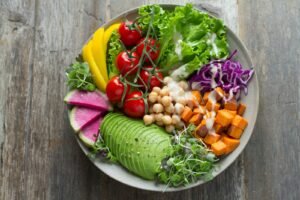
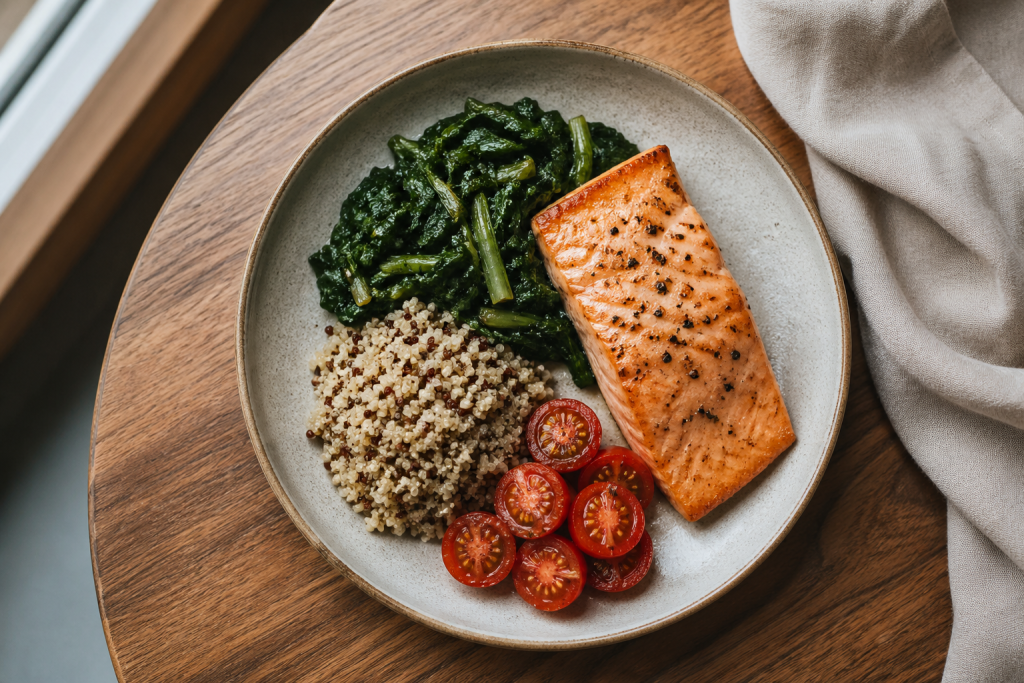
  • Half the plate: Nonstarchy vegetables — salad greens, broccoli, spinach, green beans, peppers, mushrooms, cucumber, zucchini, asparagus, cauliflower.
  • One quarter: Protein — eggs, fish, chicken, tofu, Greek yogurt, legumes, lean meat, cottage cheese.
  • One quarter: Carbohydrate foods — rice, potatoes, oats, whole-grain bread, pasta, beans, fruit, corn.

This does not ban any food group. It gives carbohydrates a defined space inside a meal that also contains volume, fiber, protein, and micronutrients. For most people, the most realistic first question is simply: "Do I have vegetables and a protein on this plate, or is this all starch?"

2. Eat vegetables and protein before starchy foods

Food order matters more than most people realize. Several studies have shown that eating non-starchy vegetables and protein before the starchy portion of a meal produces a smaller post-meal glucose rise than eating those foods in the reverse order.

A 2015 study published in Diabetes Care compared meals eaten in different orders — vegetables and protein first versus carbohydrates first — and found significantly lower post-meal glucose and insulin levels when protein and vegetables came first.

Practical application: Start eating salad, cooked vegetables, or a protein before reaching for the bread, rice, or pasta. This one change requires no special foods and no elimination of any food group.

3. Choose slower carbohydrates more often

Not all carbohydrates raise blood sugar equally. The concept of glycemic index ranks foods by how quickly they raise blood glucose compared to pure glucose. Fiber content, food processing level, particle size, and fat or protein content all influence this.

Foods that typically produce a slower, more moderate rise:

  • Oats (especially steel-cut or rolled, not instant)
  • Beans and lentils
  • Berries
  • Apples and pears with skin intact
  • Sweet potatoes
  • Barley
  • Quinoa
  • Whole-grain bread that lists whole grain as the first ingredient
  • Plain yogurt topped with fruit

Swapping some refined carbohydrates for these options does not require a perfect diet. Choosing beans instead of white rice at one meal, or oatmeal instead of sweetened cereal at breakfast, makes a measurable difference over time.

4. Stop drinking your carbohydrates

Liquid carbohydrates digest faster than solid food because there is no chewing, and liquids typically contain less fiber. Juice, regular soda, sweet tea, flavored coffee drinks, sports drinks, and most smoothies can deliver a high dose of rapidly absorbed sugar without meaningful fullness afterward.

The CDC recommends water instead of juice or soda as a direct way to support blood sugar management.

Practical swaps:

  • Replace orange juice with a whole orange.
  • Replace regular soda with sparkling water and a citrus slice.
  • Replace flavored coffee drinks with coffee plus a splash of milk.
  • Replace a fruit-only smoothie with a smaller version that adds protein powder or Greek yogurt.

This is one change that many people underestimate because liquid calories feel less like "eating." Over the course of a day, removing sweetened drinks can reduce glucose load significantly.

5. Take a 10-minute walk after eating

Skeletal muscle is one of the primary sites for post-meal glucose uptake. When muscle is actively contracting, it pulls glucose from the bloodstream with or without insulin. Even light activity after a meal can meaningfully reduce the peak of the post-meal curve.

The CDC specifically recommends starting with a 10-minute walk after dinner as a practical entry point. Multiple studies confirm that even light-to-moderate walking in the 15–30 minutes after a meal reduces post-meal glucose compared to sitting.

If a 10-minute walk is not immediately realistic, start smaller. Two laps around the house, standing and doing light chores, or pacing while taking a phone call all count. The goal is to interrupt prolonged sitting after a carbohydrate-containing meal.

Important: People using insulin or medications that lower blood sugar significantly should discuss the timing and intensity of post-meal activity with their healthcare team, as exercise can lower blood sugar further.

6. Eat protein at breakfast

Many blood sugar problems build from breakfast because common morning foods are primarily starch or sugar: sweetened cereal, white toast with jam, pastries, flavored yogurt, or juice.

Breakfast protein slows gastric emptying, reduces the speed of glucose absorption, and helps moderate appetite through the morning — potentially reducing carbohydrate cravings later in the day.

Higher-protein breakfast options:

  • Eggs with non-starchy vegetables
  • Plain Greek yogurt with berries and a handful of nuts
  • Oats with added chia seeds and a spoonful of nut butter
  • Cottage cheese with fruit
  • Tofu scramble with vegetables
  • Beans with eggs or sliced avocado

The standard is not a perfect breakfast. It is a breakfast that contains a meaningful protein source alongside carbohydrates, rather than carbohydrates alone.

7. Use fiber as a food-first tool

Dietary fiber slows the rate of carbohydrate digestion and glucose absorption. Soluble fiber forms a gel-like substance in the digestive tract that specifically slows the movement of glucose into the bloodstream.

Most adults in the United States fall significantly short of the recommended daily fiber intake of 25–38 grams depending on sex and age. Increasing fiber from food is more effective than adding fiber supplements to an otherwise low-fiber diet.

Easy fiber additions:

  • Add a half cup of beans to soups, salads, or grain bowls.
  • Add chia seeds or ground flaxseed to oats or yogurt.
  • Substitute berries for juice.
  • Keep vegetables stocked and visible for easy access.
  • Use oats or barley as bases for breakfast or side dishes.

Increase fiber gradually. Adding large amounts quickly can cause gas, bloating, and discomfort. Adequate water intake is also essential because fiber works better when fluid intake is sufficient.

8. Manage sleep and stress

Cortisol, the body's primary stress hormone, raises blood glucose by triggering the liver to release stored glycogen and by reducing insulin sensitivity in peripheral tissues. Chronic stress or poor sleep can raise fasting glucose and worsen post-meal blood sugar even without any dietary changes.

Research published in multiple peer-reviewed journals has shown a consistent relationship between short sleep duration, poor sleep quality, and higher fasting glucose and HbA1c levels in adults without diabetes.

Practical steps that reduce cortisol and improve insulin sensitivity over time:

  • Prioritize 7–9 hours of sleep per night.
  • Establish a consistent sleep and wake schedule.
  • Reduce screen exposure in the 60–90 minutes before bed.
  • Use short walking, stretching, or breathing exercises to reduce acute stress.
  • Limit caffeine consumption after early afternoon.

These are not luxury habits. They are physiological requirements that directly interact with glucose metabolism.

9. Portion awareness without obsession

You do not need to weigh every gram of food. You do need a reasonable awareness of portion sizes for carbohydrate-dense foods.

A simple reference:

FoodModerate PortionNotes
Cooked rice or pasta1/2 to 3/4 cupAbout the size of a tennis ball
Bread1 regular sliceOr 1 small pita
Potato1 mediumAbout the size of a computer mouse
Fruit1 small piece or 1/2 cupBerries can be somewhat larger
Sweetened yogurt3/4 cupChoose plain when possible

Eating the same food in a larger portion raises blood sugar proportionally. The plate method handles this naturally by making nonstarchy vegetables the largest component of the meal.

What about supplements for blood sugar?

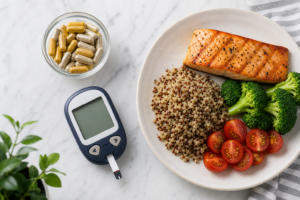
Some supplements are studied for blood sugar support, including berberine, chromium, alpha-lipoic acid, cinnamon, and psyllium fiber. A few have genuine evidence behind them in specific contexts. None replace a meal plan, physical activity, adequate sleep, or prescribed medication.

Berberine has been studied in multiple randomized controlled trials and some evidence suggests it may support normal blood sugar levels, particularly in people with prediabetes or early type 2 diabetes. However, it can interact with diabetes medications and lower blood sugar to risky levels when combined with medication. See the full evidence breakdown in our berberine for blood sugar guide.

Chromium plays a role in insulin signaling. Studies are mixed. Evidence for chromium supplementation improving blood sugar in people with adequate dietary chromium is weak. For a detailed look at the evidence, doses, and who benefits most, see our chromium picolinate guide.

Psyllium fiber taken before meals may modestly blunt post-meal glucose spikes by slowing gastric emptying. It is one of the more evidence-supported fiber supplements. Our fiber supplements comparison explains psyllium vs inulin in detail.

Who should avoid blood sugar supplements without medical guidance:

  • Anyone taking insulin or glucose-lowering medication.
  • Anyone pregnant or breastfeeding.
  • Anyone with kidney or liver disease.
  • Anyone preparing for surgery.
  • Anyone with a history of hypoglycemia (low blood sugar).

The safest approach: use supplements as a secondary layer after diet, movement, sleep, and stress management are already in place.

A quick pre-meal check

Before your next meal, run through these questions:

  1. Does my plate have nonstarchy vegetables taking up roughly half the space?
  2. Is there a clear protein source on this plate?
  3. Am I drinking water instead of juice or soda?
  4. Can I eat vegetables and protein before the starchy part?
  5. Can I plan a short walk or movement in the 15–30 minutes after eating?

You do not need to answer yes to all five at every meal. Progress happens one meal at a time.

Frequently Asked Questions

Bottom line

Supporting healthy blood sugar after meals does not require eliminating carbohydrates or buying a supplement stack. The most effective tools are already available: build a balanced plate, eat protein and vegetables before starchy foods, choose fiber-rich carbohydrates more often, skip sweetened drinks, move your body after eating, protect your sleep, and manage chronic stress. Supplements may provide additional support for some people, but they work best as a layer on top of these fundamentals — not as a substitute for them.

Related Articles

Sources

Educational note: This article is for general health education and is not a substitute for personal medical advice, diagnosis, or treatment.