
Disclosure: This article may contain affiliate links. If you buy through these links, we may earn a commission at no extra cost to you. Our recommendations are based on editorial criteria, not commission rates.
The most evidence-supported blood sugar supplement ingredients are berberine and psyllium fiber, with chromium, cinnamon, and alpha-lipoic acid showing more mixed or situation-specific evidence. None of them should replace prescribed diabetes medication, glucose monitoring, meal planning, physical activity, sleep, or medical care. If you take insulin, metformin, sulfonylureas, GLP-1 medications, blood thinners, or other prescription drugs, speak with your clinician before using any glucose-support supplement.
Blood sugar supplements are popular because they promise a simple fix for a complicated problem. The reality is more careful: a few ingredients may modestly support fasting glucose, post-meal glucose, insulin sensitivity, or related metabolic markers in some people. But the effect is usually smaller than marketing suggests, and safety depends heavily on your medication use and health history.
This guide compares common ingredients, not specific brands. That is intentional. Before choosing a product, it is more useful to understand which ingredients have evidence, which claims are exaggerated, and who should avoid them.
Quick comparison
| Ingredient | Evidence level | Best fit | Main caution |
|---|---|---|---|
| Berberine | Moderate | Adults with prediabetes or early metabolic dysfunction who are not self-treating diabetes | Can interact with diabetes medications and other drugs |
| Psyllium fiber | Moderate | People who need more soluble fiber and want post-meal glucose or cholesterol support | Can affect medication absorption; needs water |
| Chromium | Mixed | People with low chromium intake or specific clinician-guided use | May increase hypoglycemia risk with diabetes medication |
| Cinnamon | Mixed | Food-first add-on for people who already use cinnamon and tolerate it | Cassia cinnamon can contain coumarin; avoid high-dose use without guidance |
| Alpha-lipoic acid | Mixed / condition-specific | More often studied for diabetic neuropathy than general glucose support | Can lower blood sugar and interact with thyroid or diabetes medication |
Who should be careful
Do not start a blood sugar supplement without medical guidance if you:
- Have diagnosed diabetes or prediabetes.
- Take insulin, sulfonylureas, metformin, GLP-1 medications, SGLT2 inhibitors, or other glucose-lowering medication.
- Have a history of hypoglycemia.
- Are pregnant, trying to conceive, or breastfeeding.
- Have kidney disease, liver disease, or a serious gastrointestinal condition.
- Take blood thinners, immune-suppressing medication, or multiple prescriptions.
- Are preparing for surgery.
Supplements can have real biological effects. That is exactly why they can also create real risks.
What to do before buying any blood sugar supplement
Start with the foundation:
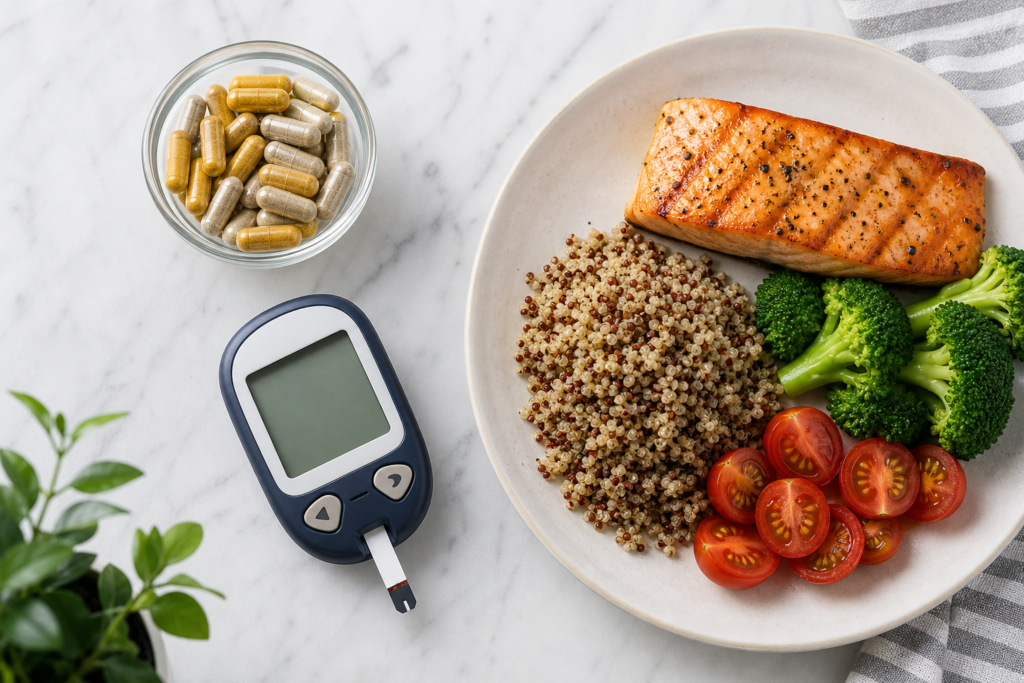
- Build meals around protein, nonstarchy vegetables, and fiber-rich carbohydrates.
- Reduce sweetened drinks.
- Take a short walk after carbohydrate-heavy meals when safe.
- Improve sleep consistency.
- Ask your clinician which glucose markers you are trying to improve.
For a practical food-first plan, read our guide on how to support healthy blood sugar after meals.
Ingredient-by-ingredient comparison
1. Berberine
Berberine is a plant alkaloid found in several herbs. It is one of the most studied supplement ingredients for glucose support, and some randomized trials and meta-analyses suggest it may improve fasting glucose, HbA1c, and insulin resistance markers in people with type 2 diabetes.
That does not mean berberine is a natural replacement for metformin. Metformin is a regulated prescription drug with long-term safety data. Berberine is sold as a dietary supplement, where product quality, dose accuracy, and interaction risk can vary.
Best fit:
- People with early metabolic dysfunction who are already working on food, movement, and weight-related habits.
- People discussing adjunct options with a clinician.
Be careful if:
- You take diabetes medication.
- You take multiple prescriptions.
- You are pregnant or breastfeeding.
- You have liver disease or significant gastrointestinal sensitivity.
For a deeper review, see Berberine for Blood Sugar: Benefits, Dosage, and Safety and Berberine vs Metformin.
2. Psyllium fiber
Psyllium is a soluble fiber that forms a gel in the digestive tract. That gel can slow gastric emptying and carbohydrate absorption, which may reduce the size of post-meal glucose rises. Psyllium also has evidence for cholesterol support, which matters because metabolic health and heart health often overlap.
Psyllium is not exciting, but it is practical. Many adults do not get enough fiber from food, and adding soluble fiber can be a low-cost support tool when used correctly.
Best fit:
- People who struggle to reach fiber targets through food.
- People who want appetite, digestion, cholesterol, and post-meal glucose support from one ingredient.
Be careful if:
- You have swallowing difficulty, bowel narrowing, or a history of obstruction.
- You do not drink enough water.
- You take medications close to the same time, because psyllium can affect absorption.
Take psyllium with plenty of water and separate it from medications unless your clinician or pharmacist gives different instructions. For more detail, read Fiber Supplements for Appetite: Psyllium vs Inulin.
3. Chromium
Chromium is a trace mineral involved in insulin signaling. It appears in many blood sugar supplements, usually as chromium picolinate.
The evidence is mixed. Some reviews suggest chromium may improve certain glucose markers in people with type 2 diabetes, while the NIH Office of Dietary Supplements notes that there is insufficient rationale to recommend chromium supplements broadly for people with diabetes, and that chromium does not appear to help moderate glucose in healthy people.
Best fit:
- People whose clinician suspects low chromium intake.
- People using it as one part of a medically supervised plan.
Be careful if:
- You take diabetes medication, because chromium may add to glucose-lowering effects.
- You have kidney or liver disease.
- You are stacking chromium with several other glucose-support ingredients.
Read the full ingredient guide: Chromium Picolinate for Blood Sugar.
4. Cinnamon
Cinnamon is appealing because it is familiar, inexpensive, and easy to add to meals. Some meta-analyses suggest cinnamon supplementation may modestly improve fasting glucose and related markers in people with type 2 diabetes.
But cinnamon is not a diabetes treatment. Study quality, cinnamon type, dose, duration, and baseline health status vary widely. The practical use case is simple: cinnamon can be a reasonable food-level add-on, but high-dose capsules deserve more caution.
Best fit:
- People who enjoy cinnamon in food.
- People using it as a minor add-on, not a primary glucose strategy.
Be careful if:
- You take blood thinners.
- You have liver disease.
- You use high-dose cassia cinnamon products.
- You take glucose-lowering medication.
Food-level cinnamon in oatmeal or yogurt is very different from concentrated capsules taken daily.
5. Alpha-lipoic acid
Alpha-lipoic acid is an antioxidant compound studied in diabetes-related metabolic outcomes and diabetic neuropathy. It may have some glucose-related effects, but its clearest supplement conversation is often around nerve symptoms rather than everyday post-meal glucose control.
Best fit:
- People discussing diabetic neuropathy support with a clinician.
- People who need medication-aware guidance rather than a generic supplement stack.
Be careful if:
- You take diabetes medication.
- You take thyroid medication.
- You have a history of low blood sugar.
- You are using multiple glucose-lowering supplements.
Alpha-lipoic acid is not the first ingredient most people should reach for if the goal is simply steadier blood sugar after meals.
How to choose a product if you still want one
Use this checklist:
- The product lists exact ingredient amounts, not just a proprietary blend.
- The dose is realistic and not far above common study ranges.
- The brand uses third-party testing or publishes a certificate of analysis.
- The label avoids disease claims like "treats diabetes" or "reverses insulin resistance."
- The product does not stack several glucose-lowering ingredients at high doses.
- The serving instructions make sense with meals.
- The company has a clear refund policy and contact information.
- You have checked medication interactions with a clinician or pharmacist.
The FDA explains that dietary supplements are not allowed to claim they diagnose, treat, cure, or prevent disease. That matters when evaluating aggressive blood sugar marketing.
Best overall approach
For most readers, the best "blood sugar stack" is not a capsule stack. It is:
- Protein at meals.
- Fiber-rich carbohydrates.
- Fewer sweetened drinks.
- A 10- to 20-minute walk after meals.
- Better sleep consistency.
- Weight management when appropriate.
- Medication adherence if prescribed.
- A clinician-guided supplement only when there is a clear reason.
Supplements may help some people, but they work best as a secondary layer.
Frequently asked questions
What is the best blood sugar supplement?
Can supplements replace diabetes medication?
Are blood sugar supplements safe?
Should I take a supplement before or after meals?
What should I avoid in a blood sugar supplement?
Bottom line
The best blood sugar supplement is the one that fits a real need, has evidence for that need, and does not create medication or safety problems. Berberine and psyllium are the strongest starting points from an evidence perspective, but neither replaces food quality, movement, sleep, or medical care. If you take medication or have diagnosed diabetes, talk with your clinician before using any glucose-support supplement.
Related articles
- How to Support Healthy Blood Sugar After Meals
- Berberine for Blood Sugar: Benefits, Dosage, and Safety
- Chromium Picolinate for Blood Sugar
- Fiber Supplements for Appetite: Psyllium vs Inulin
Sources
- NCCIH: Diabetes and Dietary Supplements — https://www.nccih.nih.gov/health/diabetes-and-dietary-supplements-what-you-need-to-know
- NCCIH: 5 Things To Know About Type 2 Diabetes and Dietary Supplements — https://www.nccih.nih.gov/health/tips/things-to-know-about-type-diabetes-and-dietary-supplements
- NIH Office of Dietary Supplements: Chromium Fact Sheet — https://ods.od.nih.gov/factsheets/Chromium-HealthProfessional/
- FDA: FDA 101 Dietary Supplements — https://www.fda.gov/consumers/consumer-updates/fda-101-dietary-supplements
- MedlinePlus: Psyllium — https://medlineplus.gov/druginfo/meds/a601104.html
- Frontiers in Pharmacology: Berberine systematic review and meta-analysis — https://pmc.ncbi.nlm.nih.gov/articles/PMC9709280/
- Nutrition Reviews: Cinnamon supplementation systematic review and meta-analysis — https://pubmed.ncbi.nlm.nih.gov/38917435/
- Frontiers in Nutrition: Alpha-lipoic acid systematic review and dose-response meta-analysis — https://pmc.ncbi.nlm.nih.gov/articles/PMC9578061/