
Disclosure: This article may contain affiliate links. If you buy through these links, we may earn a commission at no extra cost to you. Our recommendations are based on editorial criteria, not commission rates.
Apple cider vinegar (ACV) is one of the most searched natural remedies for blood sugar management. The honest answer is more nuanced than most wellness content suggests: acetic acid — the active compound in all vinegars, not just apple cider vinegar — has been shown in small clinical trials to modestly reduce post-meal glucose spikes. That effect is real. But it is small, meal-dependent, not a replacement for any prescribed diabetes treatment, and not reliably strong enough to move HbA1c in most people.
This guide covers what the research actually tested, the proposed mechanism, how to use vinegar safely if you choose to try it, and — importantly — the interventions with stronger evidence for blood sugar control that are often worth prioritizing first.
If you take insulin, sulfonylureas, or any glucose-lowering medication, discuss vinegar supplementation with your clinician before starting. Acetic acid can modestly lower blood sugar and may add to medication effects, increasing hypoglycemia risk. For a broader view of evidence-based strategies, see how to support healthy blood sugar after meals.
At a glance: ACV vs other glucose-lowering strategies
| Intervention | Mechanism | Effect size | Evidence quality |
|---|---|---|---|
| Apple cider vinegar (acetic acid) | Slows gastric emptying; inhibits alpha-amylase; may stimulate GLP-1 | Small — 10–30% post-meal glucose reduction in responsive subjects | Small short-term RCTs; no large trials |
| Post-meal walking (10 minutes) | Muscle glucose uptake without insulin | Moderate — comparable to some medications in post-meal glucose | Multiple RCTs; strong evidence |
| Food order (vegetables/protein first, carbs last) | Delays gastric emptying; stimulates GLP-1 | Moderate — 30–40% peak glucose reduction in trials | Growing RCT evidence |
| Berberine (1,500 mg/day) | AMPK activation; alpha-glucosidase inhibition | Strong — comparable to metformin in some short trials | Multiple RCTs; head-to-head with metformin |
| Psyllium fiber before meals | Gel formation slows glucose absorption | Moderate — consistent across multiple fiber RCTs | Strong; FDA-qualified health claim |
| Metformin (prescribed) | Hepatic glucose suppression; AMPK activation | Strong; decades of trial data | First-line guideline recommendation |
How acetic acid affects blood sugar: the mechanism
The active compound in apple cider vinegar is acetic acid — the same compound in white wine vinegar, balsamic vinegar, and rice vinegar. ACV is not uniquely powerful; it just happens to be the most popular vinegar for wellness marketing.
Proposed mechanisms through which acetic acid influences glucose:
1. Alpha-amylase inhibition: Acetic acid partially inhibits salivary and pancreatic alpha-amylase — the enzyme that breaks down dietary starch into glucose. Slower starch digestion means a gentler glucose rise after high-starch meals. This is why vinegar effects are most pronounced when the meal includes significant starch (white bread, white rice, potatoes).
2. Delayed gastric emptying: Acetic acid slows the rate at which food moves from the stomach to the small intestine. A slower delivery of glucose to the intestine means a flatter, more gradual absorption curve. This is mechanistically similar to how some diabetes medications (GLP-1 agonists) work, though far weaker in magnitude.
3. GLP-1 stimulation: Some research suggests acetic acid may stimulate the release of glucagon-like peptide-1 (GLP-1), an incretin hormone that stimulates insulin secretion in response to food. This is a plausible secondary pathway, though human data specifically on ACV and GLP-1 are limited.
4. AMPK activation (animal data): Acetic acid activates AMPK in animal models — the same pathway activated by metformin and berberine. Whether this translates to meaningful human glucose-lowering at dietary doses is uncertain.
What the clinical trials found
Johnston et al., 2004 (Diabetes Care)
This is one of the most-cited ACV studies. 29 participants in three groups — type 2 diabetes, insulin resistance, and healthy controls — consumed 20 mL of apple cider vinegar (with 1 tsp saccharin) or a placebo drink before a standardized meal of white bread.
Results: In the insulin-resistant group, vinegar reduced post-meal blood glucose by 34% compared to placebo. In the type 2 diabetes group, the reduction was smaller but still statistically significant (~19%). In healthy subjects, the effect was smaller but present.
This study is important because it showed the effect is larger in people with impaired insulin sensitivity — the people most likely to seek out natural glucose-lowering strategies.
Johnston et al., 2009 (Journal of Functional Foods)
A follow-up study tested 2 tablespoons of ACV with meals over 12 weeks in obese adults. Participants who took ACV showed modest reductions in fasting blood glucose compared to placebo, but the effect on HbA1c was not statistically significant. Body weight changed minimally in both groups.
Petsiou et al., 2014 (European Journal of Clinical Nutrition)
A systematic review examined all available trials of vinegar and glycemic control. The review confirmed: vinegar consistently reduces post-meal glycemic response, the effect is dose-dependent and meal-dependent, but HbA1c evidence is weak and inconsistent.
Kondo et al., 2009 (Bioscience, Biotechnology and Biochemistry)
A Japanese randomized controlled trial used 15 mL or 30 mL of apple cider vinegar (in a drink) daily for 12 weeks in 175 obese Japanese adults. Both vinegar groups showed modest reductions in body weight, BMI, visceral fat area, waist circumference, and triglycerides compared to placebo. Fasting glucose was not the primary endpoint but trended lower in the higher-dose group. This study suggests metabolic effects beyond just post-meal glucose blunting — but the effects were modest (1–2 kg weight loss over 12 weeks).
Key limitations across all studies
- Most trials involve fewer than 50 participants
- Trials run 4–12 weeks — no long-term safety or efficacy data
- Many measure post-meal glucose only, not HbA1c
- Results are most consistent for high-starch meals — less effect on low-carb meals or meals already high in fiber
- Studies use liquid vinegar, not gummies or capsules with unknown dosing
ACV gummies vs liquid vinegar
ACV gummies are among the best-selling supplements in the metabolic category. The gap between marketing and evidence is significant:
| Form | Acetic acid dose | Evidence | Issues |
|---|---|---|---|
| Diluted liquid (1–2 tbsp) | 750–1,500 mg acetic acid | What clinical trials actually used | Tooth enamel and esophagus risk if undiluted |
| ACV gummies (typical dose) | 50–250 mg acetic acid (often unclear) | None — no trials on gummies | Often contain added sugar; unknown acid dose |
| ACV capsules | Variable; often poor bioavailability data | Very limited | Concentration and acid activity unclear |
| White wine or balsamic vinegar | Comparable if acetic acid % is similar | Same mechanism as ACV | Choose low-sugar balsamic |
Bottom line on gummies: they are typically an ineffective substitute for liquid vinegar. The acetic acid dose is fraction of what trials used, the added sugar offsets any glucose benefit, and the dose consistency is poor.
How to use apple cider vinegar safely
If you decide to try vinegar for post-meal glucose, follow the protocol that most closely matches what trials used:
Protocol:
- Dose: 1–2 tablespoons (15–30 mL) of apple cider vinegar
- Dilution: Always dilute in 200–250 mL (8 oz) of water. Never drink undiluted.
- Timing: Take 5–15 minutes before your largest carbohydrate-containing meal, or with the meal
- Straw: Use a straw to reduce tooth enamel contact
- After use: Rinse your mouth with plain water. Do not brush teeth immediately (softened enamel is vulnerable)
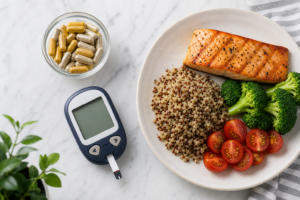
- Duration: Run a 4-week trial; track fasting glucose or post-meal glucose if you have a glucometer
What type of ACV to use: "Raw, unfiltered" ACV with "the mother" is most popular, but the mother (colony of bacteria and yeast residue) is not the active component for glucose effects. Standard apple cider vinegar with 5% acidity works for this purpose.
Safety: who needs to be careful
Tooth enamel erosion: Regular undiluted vinegar use is documented to cause dental erosion. Always dilute and use a straw.
Esophageal irritation: Case reports exist of esophageal injury from undiluted vinegar shots. Dilution eliminates this risk for most people.
Gastroparesis: People with gastroparesis (delayed gastric emptying, often in long-standing diabetes) should avoid vinegar, as further slowing of gastric emptying can worsen the condition and cause unpredictable glucose patterns.
GERD: Acetic acid can trigger or worsen reflux symptoms. If you have frequent heartburn, vinegar is likely not appropriate.
Medication interactions:
- Insulin and sulfonylureas: Additive glucose-lowering effect increases hypoglycemia risk — monitor closely and discuss with your prescriber
- Diuretics (thiazide and loop): Theoretical potassium-lowering interaction with high-dose regular vinegar use
- Digoxin: Theoretical interaction via potassium levels at very high chronic doses
Potassium: There are rare case reports of hypokalemia (low potassium) with very high-dose ACV use over extended periods. Standard 1–2 tbsp per day is unlikely to cause this, but excessive amounts are not recommended.
Where ACV fits in the overall blood sugar picture
Evidence-ranked tools for post-meal glucose management:
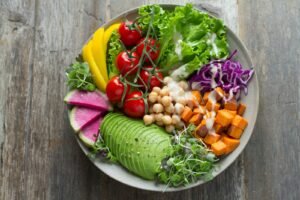
- Meal composition and food order — protein and vegetables before refined carbs consistently reduces peak glucose by 30–40% in RCTs. No cost, no risk.
- Post-meal walking — even 10 minutes significantly blunts the glucose curve.
- Fiber with meals — psyllium before carbohydrate-heavy meals reduces post-meal glucose rise.
- Sleep and stress management — poor sleep and high cortisol meaningfully shift insulin sensitivity.
- Vinegar with high-starch meals — a reasonable small add-on for some people, not the foundation.
- Berberine and chromium — stronger effect sizes than ACV but also more drug interaction risk; require medical discussion. See also berberine vs metformin for a full comparison.
ACV may be worth a structured 4-week trial if you are already doing the basics. It is not worth prioritizing over the interventions above.
Frequently Asked Questions
How much apple cider vinegar should I take for blood sugar?
Does apple cider vinegar lower HbA1c?
Can I use ACV if I take metformin?
Is apple cider vinegar safe for people with type 2 diabetes?
Does ACV work for type 1 diabetes?
Will ACV break my intermittent fast?
Which is better for blood sugar — ACV or berberine?
What is "the mother" in apple cider vinegar?
Can ACV help with weight loss?
Is balsamic vinegar as effective as ACV for blood sugar?
Bottom line
Apple cider vinegar can produce a modest, meal-dependent reduction in post-meal glucose spikes for some people — particularly those who already have impaired insulin sensitivity and eat high-starch meals. The effect is real but small, not proven to improve HbA1c reliably, and not a substitute for established diabetes management. Used correctly (diluted, with meals, via straw, at 1–2 tablespoons), the safety profile is good for most healthy adults. Prioritize proven behavioral strategies first — meal composition, movement, sleep — and consider vinegar as a low-cost add-on, not a foundation.
Related Articles
- How to Support Healthy Blood Sugar After Meals
- Berberine for Blood Sugar: Benefits, Dosage, and Safety
- Berberine vs Metformin: What the Research Actually Compares
- Chromium Picolinate for Blood Sugar
- Fiber Supplements for Appetite: Psyllium vs Inulin
Sources
- Diabetes Care 2004: Vinegar improves insulin sensitivity — https://pubmed.ncbi.nlm.nih.gov/15277160/
- European Journal of Clinical Nutrition 2014: Vinegar and glycemic control review — https://pubmed.ncbi.nlm.nih.gov/24284069/
- Bioscience Biotechnology Biochemistry 2009: ACV and body composition in obese adults — https://pubmed.ncbi.nlm.nih.gov/19661687/
- Journal of Functional Foods 2013: Systematic review of vinegar and metabolic markers — https://pubmed.ncbi.nlm.nih.gov/23979220/
- NIH Office of Dietary Supplements: Chromium — https://ods.od.nih.gov/factsheets/Chromium-HealthProfessional/
- ADA Standards of Medical Care in Diabetes — https://diabetesjournals.org/care/issue