Disclosure: This article may contain affiliate links. If you buy through these links, we may earn a commission at no extra cost to you. Our recommendations are based on editorial criteria, not commission rates.
That is why many registered dietitians and gastroenterology researchers recommend a different order of operations: fiber before probiotics. Not because probiotics are useless, but because introducing live bacteria into a gut starved of prebiotic fuel often produces expensive urine, transient bloating, and little lasting change.
This article explains the science behind sequencing, how to increase fiber without misery, when probiotic supplements still earn a place, and how to match strategy to symptoms like bloating, constipation, or post-antibiotic recovery.
Important: Sudden high fiber intake can worsen symptoms in some people with IBS, SIBO, or active inflammatory bowel flares. Titrate gradually and involve your clinician for diagnosed digestive conditions.
Why order matters: colonization needs fuel
Probiotics are live microorganisms intended to confer a health benefit when administered in adequate amounts — per the World Health Organization definition. But survival through stomach acid is only the first hurdle. For bacteria to persist beyond a few days, they need:
- Fermentable substrates (prebiotic fibers, resistant starch)
- Appropriate gut pH and transit time
- Limited competition from dysbiotic overgrowth in some cases
- A hospitable mucosal environment maintained by SCFA-producing species
Short-chain fatty acids (SCFAs) — especially butyrate — are produced when fiber-fermenting bacteria metabolize plant material. Butyrate supports colonocyte health and may reinforce gut barrier integrity in human and animal studies. When fiber intake is low, SCFA-producing taxa decline in observational dietary studies comparing Western and plant-rich diets.
Adding probiotics without increasing fiber is like planting seeds in depleted soil — some may sprout briefly, then fade.
Our probiotics vs prebiotics comparison covers definitions in depth. The practical takeaway: prebiotics feed the team already on the field; probiotics draft new players. Most people need a better game plan for the existing roster first.
What "fiber first" actually means
Fiber first is not a single product. It is a hierarchy:
- Food diversity — varied plant foods weekly (goal often cited: 30+ plant types per week in microbiome research, though perfection is not required)
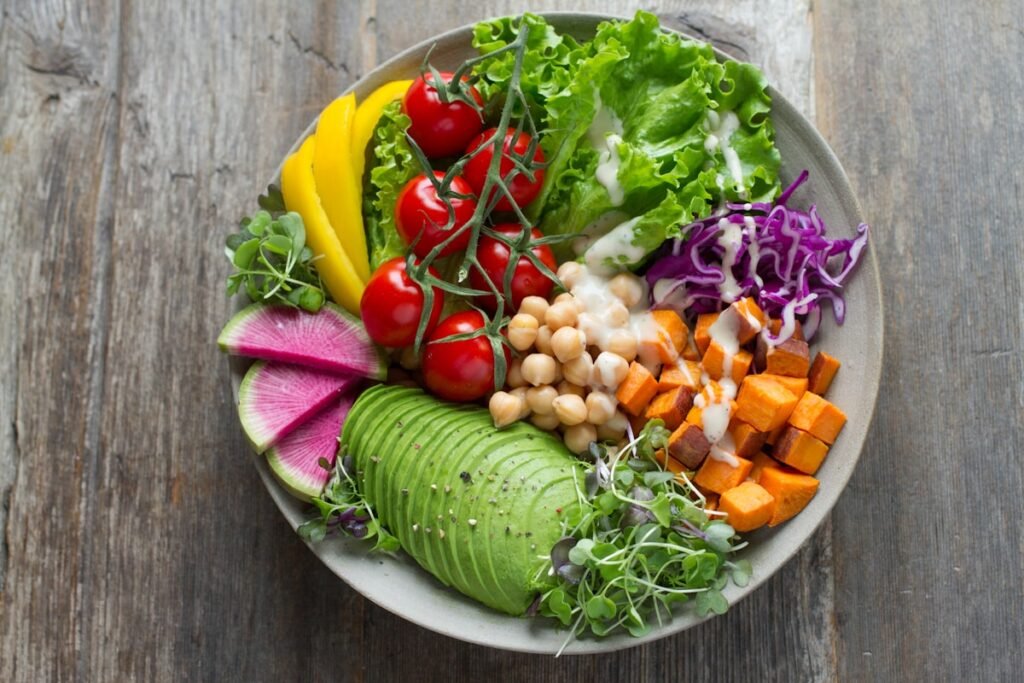
- Soluble and insoluble fiber from meals — oats, beans, lentils, berries, cruciferous vegetables, nuts, seeds
- Targeted prebiotic foods — garlic, onions, leeks, asparagus, slightly green bananas, cooled potatoes and rice for resistant starch
- Fiber supplements when food is insufficient — psyllium, inulin, partially hydrolyzed guar gum, depending on tolerance and goals
Only after this foundation — or in parallel with a specific medical indication — does a strain-specific probiotic make strategic sense.
Fiber types and what they do
| Fiber type | Examples | Primary effects | Notes |
|---|---|---|---|
| Soluble | Oats, psyllium, beans, apples | Gel-forming; may soften stool; feeds bacteria | Helpful for mixed IBS patterns when titrated slowly |
| Insoluble | Wheat bran, vegetables skins | Adds bulk; speeds transit for some | Can worsen bloating if introduced too fast |
| Fermentable prebiotic | Inulin, FOS, GOS, onions, garlic | Strongly feeds Bifidobacteria | Gas common early; start low |
| Resistant starch | Cooled potatoes/rice, green bananas, legumes | Butyrate production | Food prep matters |
| Functional supplement fiber | PHGG, acacia | Often gentler for sensitive guts | Useful when whole food increase is hard |
For supplement-level decisions between psyllium and inulin — appetite effects, cholesterol support, and IBS tolerability — see our detailed fiber supplements comparison.
How to increase fiber without bloating
The number one reason people abandon fiber strategies is too much, too fast. Bacteria ferment new substrate vigorously, producing gas — normal physiology, miserable experience.
Week 1–2: Add one high-fiber food daily — a half cup of beans, an extra vegetable serving, or a small bowl of oats. Increase water intake alongside soluble fiber.
Week 3–4: Introduce a second fiber source or a partial supplement dose (e.g., one teaspoon psyllium or 2–3 g inulin) if food alone is insufficient.
Week 5+: Assess stool pattern, bloating, and satiety. Adjust types — some people tolerate psyllium better than inulin or vice versa.
Movement helps. Walking after meals supports motility and may reduce bloating sensation independent of microbiome changes.
Track FODMAP sensitivity if IBS is diagnosed. High-prebiotic foods are high-FODMAP. Fiber first still applies, but food choice must be individualized — sometimes with a low-FODMAP phase before broad prebiotic expansion.
When probiotics should come first (or early)
Fiber first is a default, not a dogma. Situations where earlier probiotic use is evidence-supported:
After antibiotics. Antibiotic-associated diarrhea prevention has the clearest probiotic data for specific strains — notably Saccharomyces boulardii and Lactobacillus rhamnosus GG. Here, probiotics are timed to a defined event, often alongside gradual fiber reintroduction as tolerated.
Clinician-directed strain for a defined condition. Examples include certain IBS strains (e.g., Bifidobacterium infantis 35624 in some protocols) or multi-strain formulas studied in inflammatory bowel disease — always under medical supervision.
Acute infectious gastroenteritis recovery. Some guidelines discuss targeted probiotic use; strain and duration matter.
You already eat 30+ plant foods weekly and still have symptoms. If fiber diversity is genuinely high and problems persist, a targeted probiotic trial — one product, eight weeks, same dose — is reasonable after professional evaluation.
If none of these apply, jumping to probiotics while eating a low-fiber diet is putting the cart before the horse.
Combining fiber and probiotics wisely
When you do add both:
- Start fiber alone for 2–4 weeks unless you have a post-antibiotic indication.
- Add one probiotic strain formula at studied dose; avoid stacking three "gut health" products simultaneously.
- Separate timing if sensitive — some people take fiber supplements away from probiotic capsules to reduce immediate competitive fermentation in the stomach, though evidence is anecdotal.
- Reassess at eight weeks. Continue only if symptoms meaningfully improve.
Synbiotic products (probiotic + prebiotic in one) are convenient but make it harder to know which component helped or caused gas.
Common mistakes that undermine results
Mistake: Fiber supplement without water. Psyllium without adequate fluid can worsen constipation.
Mistake: Ignoring ultra-processed food load. No amount of inulin compensates for chronically low plant diversity and excess emulsifiers in some dietary patterns studied in animal models.
Mistake: Choosing probiotics by CFU marketing alone. Strain identity determines evidence, not billion-count headlines.
Mistake: Expecting overnight change. Microbiome shifts from dietary fiber appear in weeks; symptom relief timelines vary by condition.
Mistake: Skipping professional care for red-flag symptoms. Blood in stool, unintentional weight loss, fever, or worsening pain need medical evaluation — not another bottle.
Fiber-first meal planning (simple template)
Breakfast: Oats with berries and ground flax, or eggs with sautéed spinach and half a cup of black beans.
Lunch: Lentil soup, big salad with chickpeas, olive oil, and mixed vegetables.
Dinner: Roasted vegetables, brown rice or potatoes (cooled and reheated for resistant starch), grilled fish or tofu.
Snacks: Handful of nuts, apple with skin, carrot sticks with hummus.
This template is boring on purpose — sustainable beats exotic for microbiome feeding.
Frequently Asked Questions
Why not take probiotics and fiber at the same time from day one?
Is inulin the best prebiotic fiber?
Can fiber alone fix IBS?
How much fiber should I aim for daily?
Do probiotics make fiber work better?
Should I take fiber before or after meals?
When should I stop a fiber supplement?
Bottom line
A smarter gut strategy starts with feeding the microbes you already have — through diverse plants, gradual fiber increases, and targeted supplements when food falls short. Probiotics have their place, especially after antibiotics or when a clinician recommends a studied strain, but they rarely outrank fiber for first-line microbiome support.
Build the foundation first. Add bacteria when the soil is ready. Your gut — and your budget — will reflect the difference.
Related Articles
- Fiber Supplements for Appetite: Psyllium vs Inulin
- Probiotics vs Prebiotics: Which Should You Try First?
- How to Improve Gut Health Naturally
Sources
- Cell 2021: Fermented and high-fiber diets alter microbiome and immune markers — https://pubmed.ncbi.nlm.nih.gov/34224620/
- Nutrients 2019: Dietary fiber, gut microbiota, and SCFAs — https://pubmed.ncbi.nlm.nih.gov/30857316/
- American Journal of Clinical Nutrition 2012: Resistant starch and butyrate — https://pubmed.ncbi.nlm.nih.gov/22648709/
- Cochrane Reviews: Probiotics for antibiotic-associated diarrhea — https://www.cochranelibrary.com/
- NIH Office of Dietary Supplements: Dietary Fiber Fact Sheet — https://ods.od.nih.gov/factsheets/Fiber-HealthProfessional/
- NCCIH: Probiotics — https://www.nccih.nih.gov/health/probiotics-what-you-need-to-know