
Disclosure: This article may contain affiliate links. If you buy through these links, we may earn a commission at no extra cost to you. Our recommendations are based on editorial criteria, not commission rates.
Headaches, lightheadedness, muscle cramps, and “fasting flu” during intermittent fasting or low-carb diets are often blamed on hunger — but they frequently reflect sodium and fluid shifts when insulin drops and kidneys excrete more sodium. Electrolyte drinks can help selectively; they are not mandatory for every 16:8 faster drinking adequate food at meals.
The supplement aisle sells colorful fasting salt tubs with marketing stronger than evidence. What you need depends on fast length, diet composition, sweat loss, and medications.
Quick answer
For 16:8 intermittent fasting with balanced meals: water + normal food usually covers electrolytes. Add sodium (~500–1,000 mg) and potassium from food if you get headaches, especially on low-carb or sweaty days. Longer fasts (24+ hours) or keto may need structured sodium, potassium, and magnesium without breaking medical fast instructions. Avoid sugary sports drinks unless you need carbs; check blood pressure before sodium loading.
Who this is for
People practicing intermittent fasting, OMAD, or low-carb who feel unwell in the first weeks and wonder if electrolyte powders are necessary or hype.
Who should be careful
Get medical guidance before aggressive sodium supplementation if you:
- Have heart failure, kidney disease, or cirrhosis
- Take blood pressure medications (especially diuretics, ACE inhibitors)
- Have adrenal insufficiency or are on steroids
- Are pregnant, diabetic on insulin, or have history of eating disorders
- Do prolonged fasts beyond personal medical advice
Fasting is not appropriate for everyone.
Why fasting changes electrolyte needs
| Mechanism | Effect |
|---|---|
| Lower insulin | Kidneys excrete more sodium and water |
| Glycogen depletion | Water loss (glycogen binds water) |
| Reduced food intake | Less dietary sodium/potassium/magnesium |
| Caffeine + exercise | Additional losses |
Result: orthostatic dizziness, headaches, cramps — especially days 2–5 of strict low-carb.
Core electrolytes
| Electrolyte | Role during fasting | Food sources when eating |
|---|---|---|
| Sodium | Most common deficiency symptom driver | Broth, pickles, eggs, fish |
| Potassium | Cramp prevention, blood pressure | Avocado, leafy greens, beans |
| Magnesium | Sleep, cramps, glucose control | Nuts, seeds — magnesium forms |
| Calcium | Usually adequate from diet | Dairy, fortified plants |
Do you need a supplement powder?
| Scenario | Recommendation |
|---|---|
| 16:8 + balanced diet | Water; salt food to taste at meals |
| Low-carb / keto start | Extra sodium; magnesium supplement if cramping |
| 24+ hour fasts | Electrolyte drink without sugar; medical supervision if therapeutic |
| Heavy exercise while fasted | Sodium + fluids; consider breaking fast around training |
| Standard American high-sodium diet | Unlikely sodium deficient |
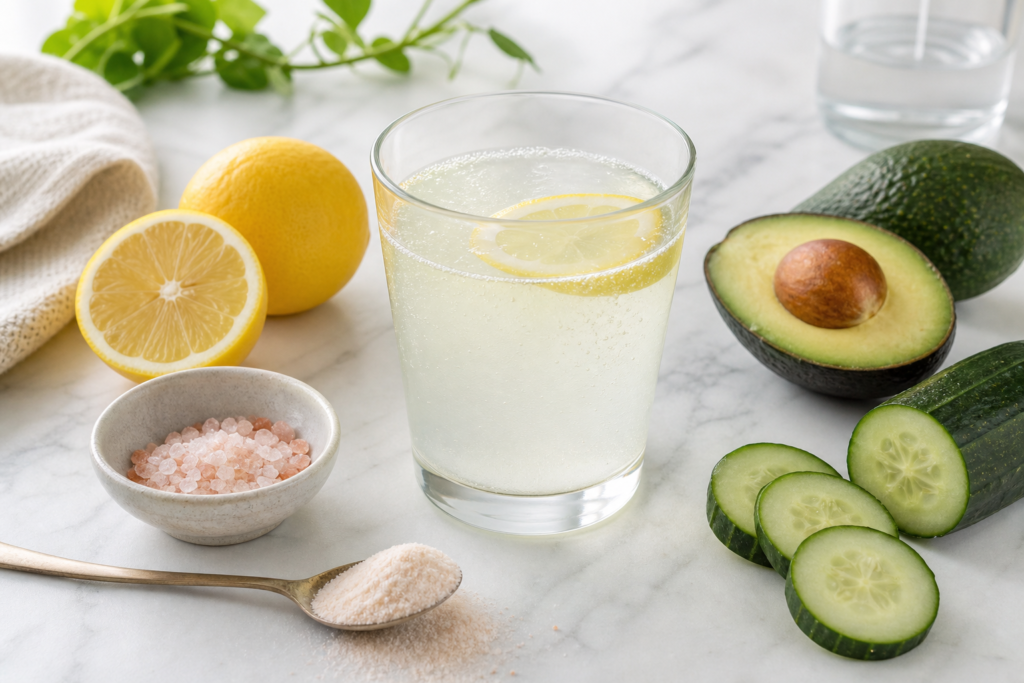
DIY option: water + pinch of salt + lemon; better than many overpriced tubs.
What to look for in products
Good:
- Clear sodium, potassium, magnesium amounts
- Low or zero sugar if fasting for metabolic goals
- Third-party testing
Skip:
- Proprietary “fasting blends” hiding doses
- High sugar (breaks strict fast definitions)
- Mega-dose potassium without medical need (heart risk)
Breaking your fast vs clean fast
Strict fasters debate whether 50 calories of electrolytes breaks autophagy — science is unsettled. Clinical priority: if you feel faint, treat electrolytes and safety over purity rules. Discuss therapeutic fasting with your prescriber.
Pairing with weight management
Electrolytes do not burn fat. They support adherence to fasting or low-carb plans:
- Green tea extract — small thermogenesis; watch liver dose
- Protein at feeding window
- Fiber for satiety
Frequently Asked Questions
Should I take electrolytes every morning while fasting?
Will electrolytes break a fast?
How much sodium during keto flu?
Can I use sports drinks?
Magnesium while fasting?
Do fasting salts help weight loss?
Are electrolytes needed for 12-hour fasts?
Can fasting cause low blood pressure?
Bottom line
Electrolytes during fasting are situation-specific: low-carb, long fasts, and heavy sweaters benefit most; typical 16:8 eaters often need only well-salted whole foods at meals. Use targeted sodium, potassium-rich foods, and magnesium for symptoms — not sugary marketing blends — and involve your clinician if you have cardiovascular or kidney conditions.
Related Articles
- Whey vs Plant Protein for Weight Loss
- Green Tea Extract for Weight Management
- Magnesium Glycinate vs Citrate
- How to Support Healthy Blood Sugar After Meals
Sources
- NIH: Dietary sodium and health — https://ods.od.nih.gov/
- Review: fasting and electrolyte physiology — https://pubmed.ncbi.nlm.nih.gov/
- CDC: Intermittent fasting consumer context — https://www.cdc.gov/healthy-weight/
- American Heart Association: Sodium — https://www.heart.org/
- NIH ODS: Magnesium — https://ods.od.nih.gov/factsheets/Magnesium-Consumer/