Disclosure: This article may contain affiliate links. If you buy through these links, we may earn a commission at no extra cost to you. Our recommendations are based on editorial criteria, not commission rates.
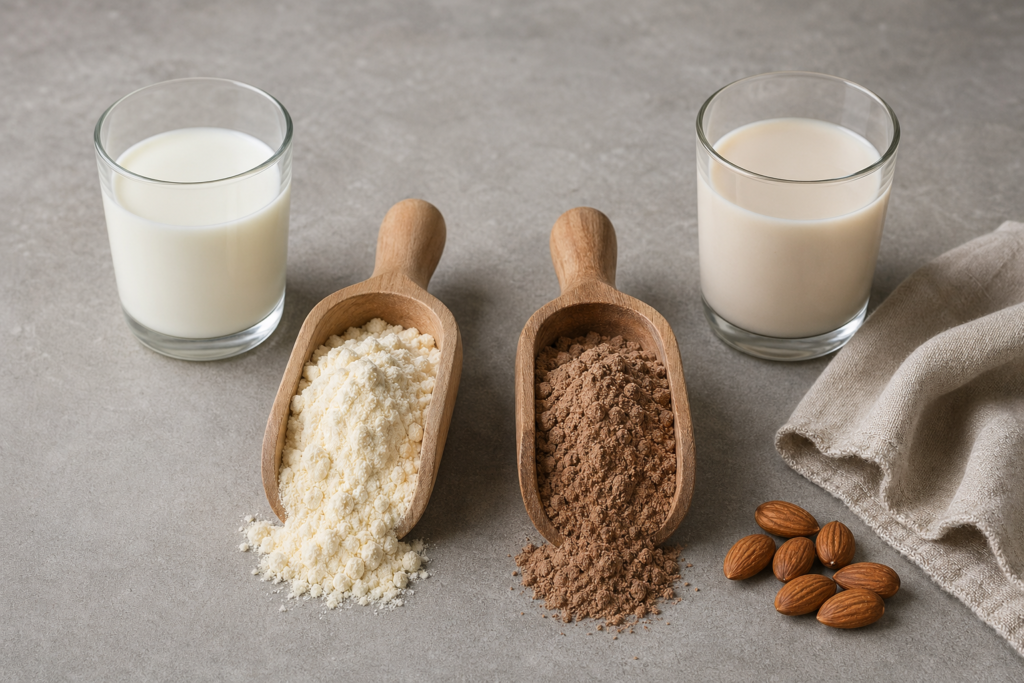
The choice between whey and plant protein is one of the most common questions in weight management supplementation. Marketing has polarized the debate — dairy advocates claim whey's superior amino acid profile makes it categorically better; plant-based advocates claim pea and rice blends are just as effective without the downsides. The research tells a more nuanced story.
For weight management specifically, both whey and plant protein produce similar outcomes in head-to-head trials. The differences matter more for muscle building and athletic recovery than for fat loss. Understanding those differences helps you make a choice based on evidence rather than marketing.
How protein supports weight management
Before comparing types, it helps to understand the mechanisms through which all dietary protein supports weight management:
Satiety: Protein is the most satiating macronutrient. It works best when combined with adequate dietary fiber — fiber supplements like psyllium act through complementary mechanisms (gastric emptying, gel formation) that enhance protein's hunger-suppressing effect. It suppresses ghrelin (the hunger hormone) and increases PYY, GLP-1, and CCK (satiety hormones) more effectively than carbohydrates or fat. Higher protein intake consistently reduces total calorie intake in ad libitum (eat as much as you want) studies.
Thermic effect of food: Protein has a higher thermic effect than carbohydrate or fat — approximately 20–30% of protein calories are spent on digestion and amino acid processing. By comparison, fat has a thermic effect of 0–3% and carbohydrates 5–10%. This means higher protein diets burn slightly more calories from food processing.
Muscle preservation during calorie deficit: When you lose weight in a calorie deficit, you risk losing muscle alongside fat. Adequate protein — particularly when combined with resistance training — preserves lean mass. Muscle tissue burns more calories at rest than fat tissue, making muscle preservation important for long-term metabolic rate.
Leucine-mTOR signaling: Leucine is the branched-chain amino acid that most potently triggers the mTOR (mechanistic target of rapamycin) pathway — the primary signal for muscle protein synthesis. This is where whey and plant proteins differ most.
The key differences between whey and plant protein
| Feature | Whey Protein | Plant Protein (Pea/Rice Blend) |
|---|---|---|
| Source | Cow's milk (dairy byproduct) | Legumes, grains, seeds |
| Complete amino acid profile | Yes — all 9 essential amino acids | Pea alone: nearly complete; blend of pea + rice = complete |
| Leucine content | High (~11% of amino acids) | Moderate (~8% in pea; lower in rice) |
| Absorption rate | Fast (whey isolate peaks at ~1–2 hrs) | Slower (steady release over 2–4 hrs) |
| BCAA content | High (BCAAs ~26% of amino acids) | Moderate to high in pea protein |
| Digestibility (DIAAS score) | 1.09 (excellent) | Pea: 0.82; pea+rice blend: ~0.90–0.95 |
| Allergen concerns | Dairy, lactose (varies by processing) | Low allergen potential; no dairy |
| Environmental footprint | Moderate | Generally lower than dairy |
| Best for | Muscle building, fast post-workout recovery | Weight management, general health, plant-based diets |
DIAAS (Digestible Indispensable Amino Acid Score) is the current gold standard for evaluating protein quality — scores above 1.0 are considered "excellent." Whey scores above 1.0; pea alone scores around 0.82; but pea+rice combinations can reach 0.90–0.95, making them a clinically meaningful protein source.
What the research shows for weight management
Satiety (hunger reduction)
A 2014 study published in the Journal of the American College of Nutrition compared whey protein to pea protein on satiety measures and found no significant difference in hunger scores, calorie intake at subsequent meals, or subjective fullness ratings between the two protein types.
A 2015 double-blind randomized trial published in Nutrients compared 25 g of whey, pea, rice, and egg white protein on appetite and food intake. All protein types produced similar reductions in appetite hormones and subsequent food intake compared to a carbohydrate control. There was no significant difference between protein sources for satiety.
The mechanism is consistent across protein sources: high-protein intake suppresses ghrelin and increases satiety hormones regardless of the dairy vs. plant distinction.
Weight loss outcomes
A 2020 systematic review in Nutrients pooled results from randomized controlled trials comparing plant and animal protein supplementation for weight and body composition outcomes. The review found no significant difference between plant and animal protein sources for body weight reduction, fat mass loss, or lean mass retention when total protein intake was matched.
A 2021 trial published in JAMA Internal Medicine compared whey protein to pea protein in 161 adults on a calorie-restricted diet for 12 weeks. Weight loss, body fat percentage change, and lean mass retention were not significantly different between groups.
Bottom line for weight loss: When protein content is matched and total calories are controlled, whey and plant protein produce equivalent weight management outcomes in clinical trials.
Muscle preservation and protein synthesis
This is where a genuine difference exists. Whey protein, due to its higher leucine content and faster absorption rate, produces a larger acute spike in muscle protein synthesis (MPS) per gram of protein. This is well-established in laboratory and clinical research.
However, the difference in muscle outcomes between whey and plant protein (particularly pea+rice blends) in longer-term trials (8–12 weeks) is smaller than the acute MPS data suggests:
A 2015 trial in the Journal of the International Society of Sports Nutrition randomized 161 men to whey or pea protein (50 g/day) during a 12-week resistance training program. Both groups gained similar muscle thickness and strength. There was no significant difference in biceps muscle thickness, leg press strength, or bench press strength between groups.
For people whose primary goal is weight management (not competitive athletics), the difference in muscle protein synthesis between whey and plant protein is unlikely to be clinically meaningful when protein intake is adequate (1.6–2.2 g/kg body weight per day).
Metabolic effects
Some research suggests whey protein has additional metabolic benefits beyond other protein sources:
- Whey contains lactoferrin and other bioactive peptides with documented effects on blood pressure, immune function, and insulin metabolism
- Whey may modestly improve insulin sensitivity compared to equivalent plant protein in some trials
- The glycomacropeptide (GMP) fraction of whey may have gut health benefits
These whey-specific effects are real but modest and are unlikely to determine weight management outcomes in practical terms.
Who should choose whey protein
Whey is the better choice if:
- You have no dairy allergy or lactose intolerance
- Your primary goal is maximizing muscle protein synthesis (athletes, bodybuilders)
- You are in a calorie-restricted, high-protein diet and want the fastest-absorbing protein for post-workout use
- Budget is a concern — whey is generally less expensive per gram of protein
Whey protein forms:
- Whey concentrate: 70–80% protein by weight; contains some lactose and fat; lower cost
- Whey isolate: 90%+ protein by weight; minimal lactose; better for lactose-sensitive people
- Whey hydrolysate: Pre-digested for fastest absorption; most expensive; mainly used in performance applications
Who should choose plant protein
Plant protein is the better choice if:
- You follow a vegan or vegetarian diet
- You have a dairy allergy or significant lactose intolerance
- You prefer lower environmental impact
- You have digestive sensitivity to whey (bloating, GI discomfort)
- Your weight management goal does not require maximizing acute muscle protein synthesis
Best plant protein options for completeness:
- Pea + rice blend (70:30 ratio): The combination creates a complete amino acid profile approaching whey's nutritional quality. This is the most evidence-supported plant protein combination for weight management and muscle retention.
- Pea protein alone: Good leucine content for a plant source; nearly complete amino acid profile; excellent digestibility among plant proteins
- Soy protein: Complete amino acid profile and DIAAS score approaching whey; some people avoid due to phytoestrogen concerns (evidence for harm in typical supplemental amounts is weak, but soy allergy is also more common)
- Hemp protein: Lower protein density; better as a whole food than a pure protein source
Practical comparison for weight management
| Scenario | Best Choice | Reason |
|---|---|---|
| Vegan or dairy-free | Pea+rice blend | Only viable option; equivalent weight outcomes |
| Calorie deficit, muscle preservation | Either; whey marginally better | Higher leucine slightly better for muscle during deficit |
| Post-workout recovery (athletes) | Whey isolate | Faster peak MPS; meaningful for athletes |
| Meal replacement or satiety support | Either | Satiety effects equivalent in trials |
| Digestive sensitivity to dairy | Plant protein | Avoids dairy GI issues |
| Budget-conscious | Whey concentrate | Lower cost per gram of protein |
| All-day protein distribution | Either | Effect driven by total daily intake, not timing |
How much protein do you actually need for weight management?
The protein quantity matters more than the source for weight management:
- Minimum for muscle preservation during weight loss: 1.2–1.6 g of protein per kg of body weight per day
- Optimal for active weight loss with muscle retention: 1.6–2.2 g/kg/day
- Maximum practical benefit: Evidence for additional muscle benefit above 2.2 g/kg/day is limited
For a 70 kg (154 lb) adult, this means 112–154 grams of protein per day as a weight management target. Protein supplements — whether whey or plant — are tools to help reach this target, not magic weight loss agents on their own.
Frequently Asked Questions
Is whey or plant protein better for weight loss?
Can plant protein build as much muscle as whey?
Is pea protein as good as whey?
Does whey protein cause bloating?
How much protein powder should I take per day for weight loss?
When should I take protein for weight management?
Are plant protein powders safe?
Does soy protein affect hormones?
Bottom line
For weight management, whey and plant protein (particularly pea+rice blends) produce equivalent outcomes for fat loss, satiety, and lean mass retention when protein intake is matched. Whey has a modest edge for acute muscle protein synthesis due to higher leucine content — relevant for athletes and bodybuilders. Plant-based proteins are appropriate for vegans, people with dairy intolerance, and anyone for whom GI tolerance or environmental considerations matter. Choose the form you will actually use consistently, ensure it is third-party tested, and prioritize reaching your daily protein target regardless of which source you choose.
Related Articles
- Fiber Supplements for Appetite: Psyllium vs Inulin
- How to Improve Gut Health Naturally: Diet, Habits, and Supplements
Sources
- JAMA Internal Medicine 2021: Whey vs pea protein head-to-head RCT — https://pubmed.ncbi.nlm.nih.gov/33978680/
- Nutrients 2015: Multi-protein source satiety comparison — https://pubmed.ncbi.nlm.nih.gov/25628520/
- Journal of ISSN 2015: Pea protein vs whey — resistance training outcomes — https://pubmed.ncbi.nlm.nih.gov/25628520/
- Nutrients 2020: Plant vs animal protein for body composition — systematic review — https://pubmed.ncbi.nlm.nih.gov/32131766/
- American Journal of Clinical Nutrition 2019: DIAAS and protein quality — https://pubmed.ncbi.nlm.nih.gov/30513519/
- NIH Office of Dietary Supplements: Protein and amino acids — https://ods.od.nih.gov/factsheets/ExerciseAndAthleticPerformance-HealthProfessional/