Disclosure: This article may contain affiliate links. If you buy through these links, we may earn a commission at no extra cost to you. Our recommendations are based on editorial criteria, not commission rates.
———— | ————————————— | ———————————————————————– |
| Oxidation state | Oxidized form | Reduced (active antioxidant) form |
|---|---|---|
| Form in body | Both forms present and interconvertible | The dominant form in blood |
| Absorption | Good in younger adults | Superior in older adults (50+) |
| Cost | Lower | Higher |
| Stability | More stable in supplements | Less stable; requires careful packaging |
| Best for | Adults under 50 in good health | Adults over 50, heart failure patients, anyone with confirmed low CoQ10 |
In younger, healthy adults, the body efficiently converts ubiquinone to ubiquinol. In older adults (particularly those over 50), people with heart failure, or those with mitochondrial disease, this conversion is impaired — making ubiquinol the preferred form.
If you are over 50, taking statins, or have heart failure, ubiquinol (100–300 mg/day) is generally the more clinically appropriate choice.
Dosage
| Purpose | Dose | Notes |
|---|---|---|
| General antioxidant / maintenance | 100–200 mg/day | Ubiquinone or ubiquinol |
| Statin-associated muscle symptoms | 100–300 mg/day | Ubiquinol preferred; take with a fatty meal |
| Heart failure (adjunct to medical care) | 200–300 mg/day | Ubiquinol preferred; requires cardiologist involvement |
| Blood pressure support | 100–300 mg/day | Lower end of range; consistent daily use |
Key absorption note: CoQ10 is fat-soluble. Absorption is significantly higher when taken with a meal containing fat. Taking CoQ10 on an empty stomach reduces bioavailability by up to 50%.
Foods with CoQ10
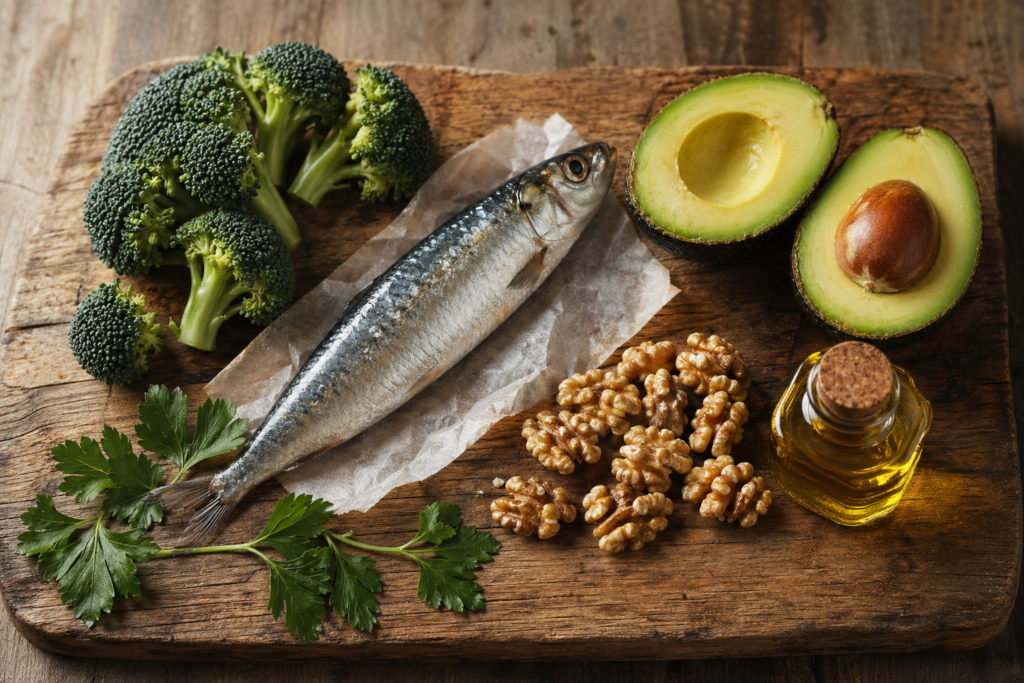
CoQ10 is found in food but typically in amounts far below supplemental doses:
- Beef heart (the richest source): ~11 mg per 3 oz
- Beef, pork, chicken: 2–5 mg per 3 oz
- Fatty fish (herring, mackerel): 2–3 mg per 3 oz
- Soybean oil: ~5 mg per tablespoon
- Nuts: 1–2 mg per oz
Achieving the 100–300 mg doses used in clinical trials through food alone is not practical — supplementation is necessary for therapeutic purposes.
Side effects and safety
CoQ10 has an excellent safety profile in clinical research:
- No significant adverse effects in trials up to 1,200 mg/day
- Mild GI effects (nausea, upset stomach) at higher doses, reduced by taking with food
- May reduce blood pressure — monitor if taking antihypertensives
- May modestly reduce blood sugar — monitor if taking diabetes medication
- No evidence of toxicity at typical supplemental doses
Drug interactions to discuss with your provider:
- Warfarin: CoQ10 may reduce warfarin's anticoagulant effect. Monitor INR if you take warfarin.
- Diabetes medications: Modest blood sugar-lowering effect may be additive.
- Blood pressure medications: May produce additive lowering.
- Chemotherapy: Some chemotherapy agents may interact with CoQ10 — discuss with your oncologist.
Who benefits most from CoQ10
The people with the strongest case for CoQ10 supplementation. Many also benefit from combining CoQ10 with omega-3 fish oil, which addresses triglycerides and inflammation as a complementary cardiovascular layer:
- Statin users with muscle symptoms: Plausible mechanism, low risk, commonly used clinically.
- People over 60 with cardiovascular concerns: Declining endogenous CoQ10 and potential heart health benefit.
- People with diagnosed heart failure: Q-SYMBIO and other trials support its use as an adjunct — under cardiologist supervision.
- People with hypertension not fully controlled by other measures: Modest blood pressure-lowering effect.
People without these indications who are otherwise young and healthy will likely show less benefit, as endogenous CoQ10 synthesis in younger adults is typically adequate.
Frequently Asked Questions
Does CoQ10 actually improve heart health?
Should everyone taking a statin also take CoQ10?
What is the best form of CoQ10?
How long does CoQ10 take to work?
Can CoQ10 replace statins?
Is CoQ10 safe with blood pressure medication?
Can younger people benefit from CoQ10?
Does CoQ10 affect blood sugar?
Bottom line
CoQ10 has meaningful clinical evidence in specific populations — heart failure patients, statin users with muscle symptoms, and people with hypertension seeking modest additional support. For older adults on statins, ubiquinol at 100–200 mg per day taken with a fatty meal is a low-risk, clinically plausible intervention. For heart failure, 300 mg/day of ubiquinol as an adjunct to standard medical treatment has the strongest evidence — but requires cardiologist oversight. Younger, healthy adults without any of these indications will see less benefit.
Related Articles
- Omega-3 Fish Oil: Benefits, Dosage, and How to Choose
- Magnesium for Sleep: Benefits, Forms, and Safety
- Best Time to Take Magnesium: Morning, Evening, or With Food?
Sources
- JACC Heart Failure 2014: Q-SYMBIO trial — https://pubmed.ncbi.nlm.nih.gov/24944403/
- Journal of the American College of Cardiology 2013: CoQ10 meta-analysis in heart failure — https://pubmed.ncbi.nlm.nih.gov/23414887/
- Cochrane Database 2015: CoQ10 for statin myopathy — https://pubmed.ncbi.nlm.nih.gov/25927745/
- Pharmacology & Therapeutics 2007: CoQ10 and blood pressure meta-analysis — https://pubmed.ncbi.nlm.nih.gov/17481410/
- NIH Office of Dietary Supplements: Coenzyme Q10 — https://ods.od.nih.gov/factsheets/CoQ10-HealthProfessional/